Archive for the ‘RPG Hub’ Category

naval combat rules through the editions

Thursday, March 20th, 2014

BattleofSluysGiven how often ship-to-ship combat appears in adventure fiction, it’s surprising how short a shrift it gets in D&D. In most editions, it takes secondary importance to more esoteric situations like aerial combat and underwater combat. When your ship is menaced by pirates and it’s time to break out the ballistas, it’s often hard to find the relevant rules.

Here’s how naval combat has fared in the various editions.

OD&D: For its page count, OD&D is one of the most comprehensive RPGs of all time. After 3 1/2 pages on aerial combat, we get a luxurious 8 pages on naval combat. Boarding, ramming, shearing oars, and maneuvering are covered pretty clearly, and we have very complete stats on each ship type’s crew and its speed in various wind conditions. Missile fire is the least developed aspect: “All missile fire, including the various forms of catapult fire, are as in CHAINMAIL. Catapult hits will do points of damage to ships, and when sufficient points have been scored the ship sinks. Large ships have from 18-24 points of possible damage before sinking, small ships have from 9-15, and a boat but 3 points.”

Let’s look in CHAINMAIL. The relevant rules are those for catapults besieging castles. A light catapult does exactly 2 points of damage so it will take 9 to 12 hits to sink a large ship. How do you hit?
1) Set up the battle on a table.
1) Estimate how many inches away your target is on the table, without measuring, and declare your attack range.
2) Cut out a circular plastic disc, 2 inches wide, and put it that many inches away from your catapult. If it overlaps the ship mini, you may inflict your 2 points of damage.

1st Edition: Naval rules get 2 1/2 pages in the DMG, right between aerial combat and underwater combat. First we get an overview of typical D&D ships, which include the drakkar, cog, and caravel, but “the ultimate warship for the purpose of AD&D is the nao” (also called a carrack). We’re trending towards the 14th century here. Although D&D is gunpowder-free, the nao is armed: The crew “consists of 2 or 3 men to work each ballista, 3 or 4 men to handle the catapult and the rest to man the sails.” Each ship type gets its own hit point range: 1-4 for a rowboat and 7-42 for a warship like the nao.

Now on to the combat rules! There’s plenty of detail on speed and wind direction, and a full column on handling fires. Boarding rules are the usual but totally adequate “use regular D&D combat rules”. The ramming rules are a little undercooked: apart from the fact that “you must strike the other ship at a 60-90 degree angle,” there’s no defense and no reference made to the HP of the ship. I guess it always works: “Depending on the size of the ship and the location and size of the hole, it may take from 1-12 turns before she sinks below the surface of the water.”

Despite all the ballistae and catapults mentioned in the ship descriptions, we get one sentence on how to use them, halfway through the “Sinking a Ship” section: “It will take several direct hits with a boulder before enough damage is done to cause a merchant ship or a warship to sink (see Hull Values and Siege Engines.)” Once again we have to consult the castle siege section of the rules to adjudicate naval combat.

Hit determination is fairly simple: ballistae consider everything AC 10, while catapults consider everything AC 0. This is modified for range, wind, size of the target (large ship: +4), etc. Damage is a little tougher. There’s a matrix which compares every material type (wood, hard stone, etc) with every attack type, from Bigby’s Clenched Fist to Trebuchet. A ship is presumably a wooden structure, so a small catapult does exactly 4 points of damage per hit. It will take about 7 hits to sink a warship. Despite the specific rules for a ballista to-hit roll, there is no damage entry for a ballista.

Basic D&D: The Expert rulebook has a tidy page on Combat at Sea. Ships have speed, AC (from 7 to 9), and Hull Points (similar to HP; a war galley has around 135). “Unless noted otherwise, most giant sea creatures and certain magic attacks will inflict 1 point of hull damage for every 5 points of normal damage.”

The rules cover catapults but not ballistas (catapults attack as a fighter of a level equal to the number of catapult operators and do 3-18 hull damage), fire (1d6 damage a turn), ramming (attacks as a first level fighter, does as much as 110 hull damage), and boarding (use your existing melee rules). Clearest rules so far.

2nd Edition: 2E has no naval combat rules in the core rulebooks. The DMG has 4 pages on aerial combat and 2 pages on underwater combat, and a section on siege engines which is remarkably inapplicable to ship-to-ship combat: instead of doing HP of damage, each hit removes cubic feet of material from a wall.

The first ship-to-ship rules are in the 1992 Forgotten Realms supplement Pirates of the Fallen Stars. My long-held belief is that if your edition’s only rules for something are in a Forgotten Realms book, your edition has no rules for that thing.

The best 2e rules for naval combat are probably in Spelljammer. Ignore the fact that it’s in space: Spelljammer ships have speed, maneuverability class, facing, armor rating (AC) and hull points (HP). Weapons have a THAC0, variable damage, and range. For the first time, everything I need to resolve a ballista attack, all in one place!

Spelljammer also has charts for damage to specific parts of the ship, a page and a half on ramming, a column on shearing, and 2 pages on boarding. Instead of saying “use D&D melee rules for boarding,” it presents a mass combat subsystem. And, despite the fact that it’s in space, combat is in 2D!

2E went on to print large-scale naval combat rules in a Birthright setting sourcebook, and, at the end of its run, “Of Ships and the Sea” in 1997. I haven’t read the latter, but I understand that the rules are complete but cumbersome. If anyone’s got it, can they chime in?

3rd Edition: 3E has no naval combat in the core books. The PHB includes speed for various ships. The DMG includes rules for aerial combat and underwater combat.

Vehicle combat (including ships) appears in the 3.0 Arms and Equipment Guide. Instead of ships having hit points or hull points as in previous editions, each ship hull is divided onto many 10x10x10 sections, and the masts are divided into rigging sections. Each has its own hardness and HP. Destroying sections reduces ship effectiveness, and also damages adjoining sections next turn, in a cascade of death that might take several rounds to adjudicate.

For missile fire we’re again referred to the siege section of the DMG, where we learn that 3e treats a ballista, hilariously, as a Huge crossbow using the weapon size rules, so medium creatures have a -4 to aim it and Small creatures have a -6. It takes about 3 or 4 skill checks to load and fire each siege engine.

The major 3.5 sourcebook for nautical adventure is Stormwrack. Stormwrack comes with an apology for its rules: “The best way to keep your D&D game running smoothly during a ship-to-ship encounter is to make any naval battle in which the PCs participate into a boarding action as soon as possible.” In third edition, that might be true.

Stormwrack replaces battlemat combat with a narrative system where only the distance between two ships is important (so it doesn’t work for 3 or more ships.) Instead of sailing around each other, captains make opposed Profession (sailor) checks for “the advantage.” You can’t do anything without The Advantage except try to steal The Advantage, which is also done with the captains’ opposed Profession (sailor) checks. Ramming, grappling, and shearing are all opposed Profession (sailor) checks that you can make if you have advantage. Your Profession (sailor) modifier basically determines the outcome of combat. It’s like if D&D combat used your initiative roll for initiative, to-hit, and armor class, and if you lost initiative you’d never get to take a turn at all.

4th Edition: No naval combat rules in the core rulebooks (though, as usual, the DMG has rules for underwater and aerial combat).

Vehicles (including ships) are detailed in Adventurer’s Vault. Vehicles have HP, AC and defenses, so they interact normally with most game rules; HP is scaled to characters, so a “greatship,” for instance, has 400 HP. Vehicles also have facing, which isn’t otherwise a feature of 4e, and, regardless of type, have a turn radius of 90 degrees per turn. Adventurer’s Vault includes rules for crashing and ramming, but I can’t find standard rules for ballista or catapult fire anywhere, even in the siege section of the DMG, since there are no siege rules in 4e.

Conclusions: Naval combat is usually an afterthought in D&D. It hasn’t cracked the core rulebooks since 1979. When it appears, it’s either incomplete or abstruse. The most elegant and usable rules are, by far, the 1-page rules in the Basic set, with Spelljammer the surprise runner-up. The worst set of rules is 3rd edition, with its honeycomb of interrelated hull sections and its overreliance on one skill.

Next week I’ll write up my own one-page, any-edition naval combat ruleset.

how big is stuff, and how much does it weigh?

Tuesday, March 11th, 2014

The PCs ask: “Can I lift the life-sized gold statue?” “How much food will fit in the castle’s cellars?” “How many books in the library?” “Can I carry the boat on my back?” “How many coins fit in my backpack?” Dammit, now you have to do calculations.

Here are six numbers that you can learn to make a ballpark estimate on nearly any weight/volume question. These are useful for quick plausibility calculations when the players try something you didn’t expect. We want memorable numbers, accurate within 20% or so.

The First Number: Density of water: The first fact you need to know is that a cubic foot of water weighs around 60 pounds. Water is good because the density of the human body is virtually identical to that of water, and we all have a good intuition about how big, say, a 180# person is compared to a 120# person.

Numbers two through six: Density of Everything Else: There are basically six materials that are useful for D&D. Their weights are given in multiples of water.

60# cubic foot of water
2/3x Things that float
2x Dirt
3x Stone
10x Most metal
20x Gold and platinum

Now the details:

Water: Lots of things are around the same density as water, especially things that are mostly water: wine, ice, people, orcs, dragons, and raw meat. Also leather (a meat byproduct), vellum (a leather byproduct) and paper (a vellum competitor) are around the same weight as water.

Everything that floats: If it floats, and you can use it in D&D, it’s probably around 2/3 the density of water: 40# per cubic foot. Oil, wood, cloth, and common medieval foods like wheat, beans, vegetables, and dried meat are all around this weight. The few lighter substances (sawdust, snow, feathers) don’t come up that much in D&D.

Dirt: Dirt includes clay (and its byproduct bricks), sand (and its byproduct glass) and soil.

Stone: If you’re stoned by a medusa, your weight is multiplied by 3.

Most metal: Metal weight varies: steel is around 8x the density of water; copper and silver are around 9x; lead is 11x. 10x is a convenient and memorable average.

Gold and platinum: The really valuable metals are around 20x the density of water (gold 19x; platinum 21x).

Loose packing: Keep in mind that these densities are for solid, or relatively solid, materials. If something is crated, barreled, shelved, packed with straw, loosely piled, or stacked, multiply its volume by x2. If you need aisles, such as in a storeroom or library, multiply by another x2.

Examples: From these six numbers, and the loose-packing estimates, you can easily calculate the following:

  • Statues: That life-sized statue of a 200# man is 130# in wood, 600# in stone, 2000# in iron, and 4000# in gold. In 3e, you’d need a strength of 25 to drag the gold statue.
  • Storage: Let’s say your castle has a 50x50x10 cellar. You could theoretically pack 25k square feet or 1 million pounds of food in there. At a ration of one pound per day, that would feed 5000 people for six months. But your food is probably stored in aisles of barrels and crates, so you can probably only feed 800 people for six months.
  • Wooden stuff: An oak table, 12″x4″ and 1 inch thick, would be about 4 cubic feet of wood, or 160#. A boat with the same dimensions would use a little more wood for the sides and maybe weigh 200#.
  • Books: A cubic foot of paper (60#) would make 12 5-pound tomes. Shelved and in aisles (/4), that’s, like, 3 books per cubic foot. Doesn’t sound like much, but a 20″x20″ library with 5″ shelves holds 6000 books.
  • Treasure: Let’s say you have a cubic foot of space in your backpack. By volume, you could fit 1200# of solid gold or maybe 600# of loose coinage. That’s 30,000 GP. Of course, your backpack would break under the weight, even if you could lift it.

    References:
    http://www.engineeringtoolbox.com/specific-gravity-solids-metals-d_293.html
    http://www.engineeringtoolbox.com/density-materials-d_1652.html
    http://go.key.net/rs/key/images/Bulk%20Density%20Averages%20100630.pdf
    http://www.loc.gov/today/pr/2002/02-164a.html

  • today is my dying day

    Wednesday, March 5th, 2014

    There’s a family story about my wife as a little girl: while playing with her dolls, she monotoned in a creepy Children of the Corn voice, “The mother said, ‘today is my dying day.’ The mother said, ‘today is my dying day.'”

    Even without the Twilight-Zone-child element, this quote has something eldritch to it. What is this “dying day” which can be identified so presciently? I thought I’d see what D&D content I could get out of it.

    The “Dying Day” is obviously a high elf thing. When they enter the autumn of their lives, high elves learn the day on which their spirit will move on (barring early accidents). Knowing this would bother humans, but high elves seem fine with it. They make ready cheerily for their departure. They might even send craftsy invitations letterpressed on oak leaves: “Save the date: Lunaniel Weatherbow’s dying day is Feb 23 at the Big Tree. INVITATION TO FOLLOW”

    elfyThe deathbed is another high elf tradition. Elves don’t need to sleep (although some do for fun!), so this might be their only bed ever. It’s a big wooden affair with white sheets (symbolizing winter). Young high elves won’t use a bed with white sheets; it’s bad luck.

    A day or two before your dying day, you become too listless to move: you just lie around in your deathbed looking attractively and non-specifically sick. On your dying day, all your friends visit your bedside; you clasp their hands feebly and give them each one last memento: some money, a piece of artwork, your job title, your unfulfilled quests. That’s how high elf inheritance works. If someone can’t make it to your dying day, they don’t get anything. Once you’ve said all your goodbyes, you close your eyes and drift away.

    Some high elves get the urge to hurry the process. A few years or decades before their dying day, they head west, across the sea, to the mysterious homeland of the elves (Elvenhome, Feywild, Faerie, Tir Na Nog, Lyonesse, whatever it’s called in your campaign world). As soon as they reach that shore, they gain +2 Wisdom. But they will never willingly return to the mortal lands. They keep migrating west until they disappear from the world.

    Wood elves? No dying day. They’ve lost that sense. And they think the whole dying-day party is creepy. Half-elves with a high elf parent DO know their dying day, but they inherit their fear of death from their human side, so it drives them CRAZY.

    Here’s how you could use the dying day in a D&D campaign:

  • It would be handy to talk to a certain elf for a quest, but he’s already Gone West. Follow him into elf-land?
  • Your broody half elf character learns his dying day. Something new to brood about!
  • A PC gets a dying day invitation from an old friend. If they attend, they might get presents!
  • The inn has a big party of fancypants elf nobles camping outside, muttering about how they were insulted by the innkeeper. They were given beds with white sheets. Will the PCs smooth things over or incite a riot and profit by the confusion?
  • The PCs stumble on a dying day ceremony in a random clearing. There’s a tradition that everyone who attends should get a gift, so the elf is bound to give something to each PC. Depending on how they act, it might be something nice, or a single gold piece, or an unfulfilled quest (a geas).
  • An NPC elf hires the PCs to help with a dangerous mission. He’s two days away from his dying day, and he’d really like to get there in one piece. Furthermore, he’s too old for this shit.
  • An evil elf decides to hold his dying day revels in the unwilling home of his enemies. Throughout the day, he appears (or sends an illusion or messenger) to each inhabitant, bestowing curses and laughing in a highly obnoxious Phantom of the Opera manner. How are the PCs involved? A month earlier, he sent an ominous Save the Date. The terrified hosts asked the PCs to be on hand to help.
  • the second best barbarian is out of print

    Thursday, February 27th, 2014

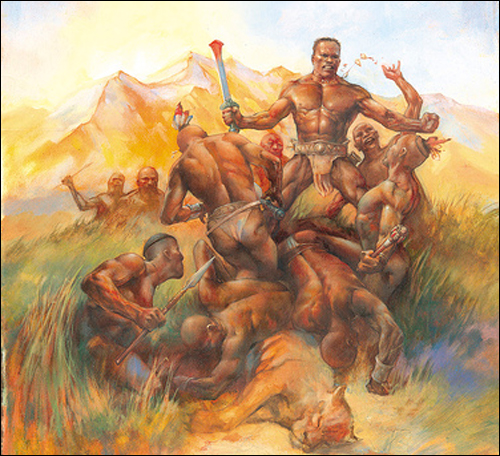
    imaro_cover_paintingCharles Saunders’ Imaro might be the best sword-and-sorcery successor to Robert E Howard’s Conan the Barbarian. In my opinion, Imaro beats C. L. Moore’s Jirel of Joiry by a hair and Gardner F Fox’s Kothar the Barbarian by a mile. (Kothar’s pretty hacky but, I admit, I love it anyway.)

    Imaro is a black hero in a vast fantasy Africa. The African plains setting gives Imaro plenty of room to flex his muscles, and plenty of beasts to overpower, sorcerers to kill, and ruins to plumb. Compared to this setting, fantasy Europe seems claustrophobic, but I guess there are more literary agents in fantasy Europe: Imaro is out of print. After its debut in the 70s, there wasn’t a reprint of the original Imaro stories until 2006. Now those are out of print as well. Look how expensive Imaro books are on Amazon: even used copies are $40 to $100. The cheapest way to get the first book is actually the $21 audiobook.

    I have the 2006 reprints of books 1 and 2, and I thought that was all the Imaro there was. I just learned that Charles Saunders is still publishing Imaro books on Lulu. Maybe the best living sword-and-sorcery novelist doesn’t have a major book contract (??). And at $20 each, those Lulu books look damn cheap compared to the Amazon prices. The biggest barrier to entry for a new reader is finding a copy of Books 1 and 2.

    Here’s my recommendation for the budget-conscious barbarian lover:

    Buy the audiobook of Imaro for $21

    Buy Imaro 2: The Quest for Kush audiobook for $14

    Imaro 3: The Trail of Bohu on lulu for $20

    Imaro 4: Dossouye on lulu for $20

    Imaro 5: the Naama War on lulu for $20

    moving the great wheel to the world map

    Tuesday, February 18th, 2014

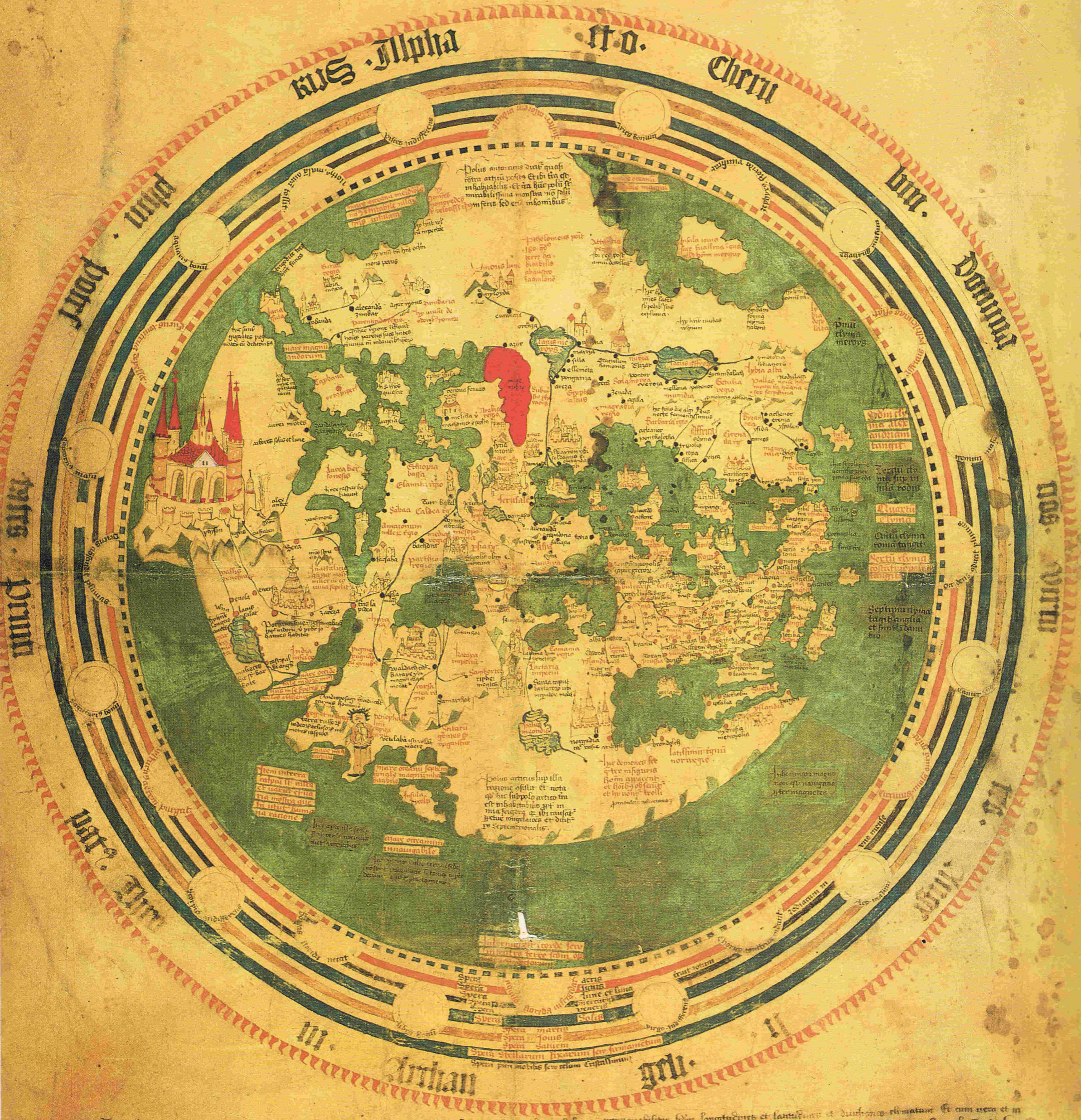
    When I first saw the Walsperger Map, a medieval German world map, I was struck by the fact that the Kingdom of Heaven is a physical place at the edge of the map (located vaguely in the China area). You could walk to Heaven! I thought it would be fun to make a D&D world map based on this conceit. All the planes of the Great Wheel are accessible by walking to different corners of the world.

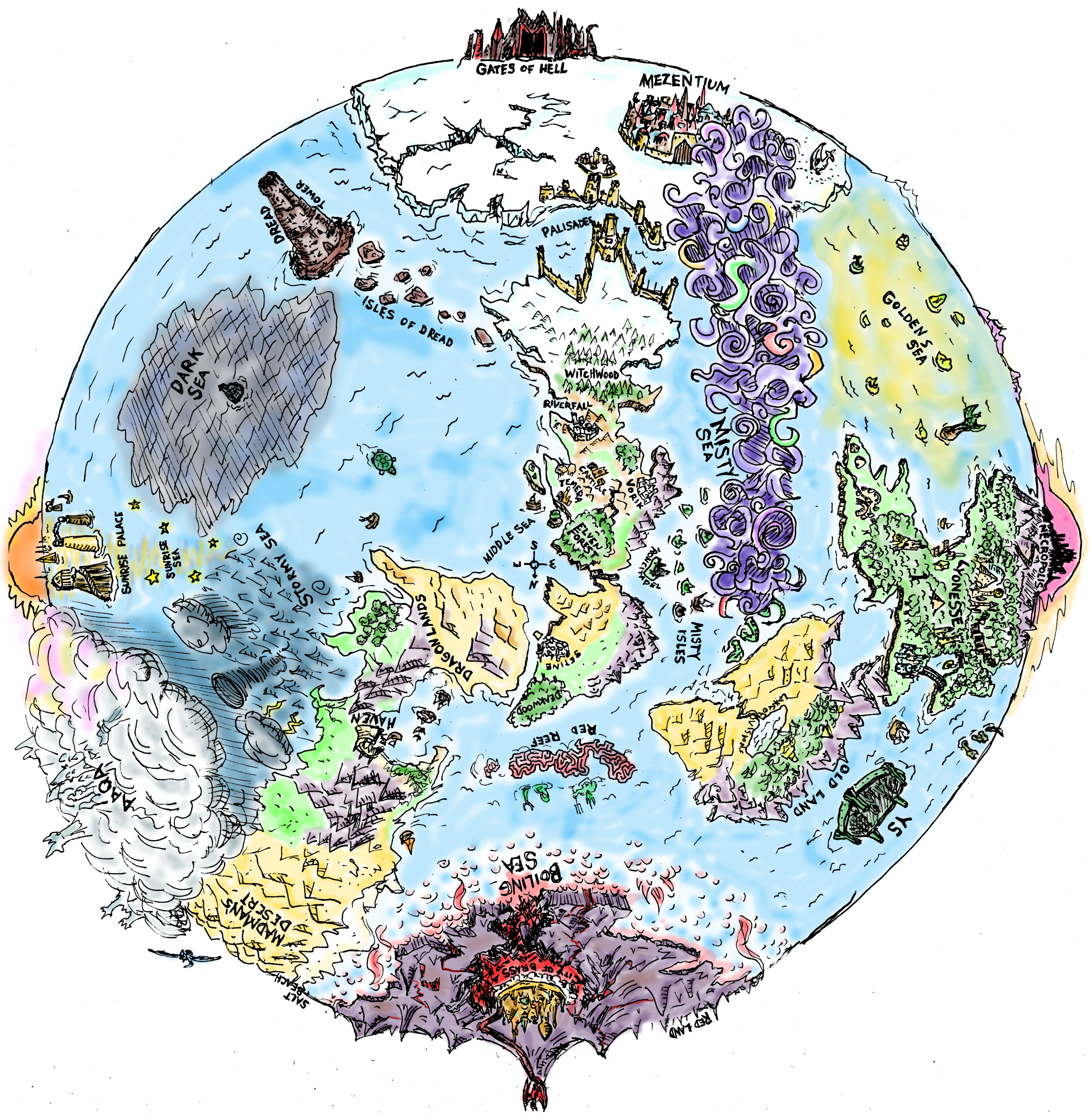
    Here’s the map I drew based on this idea.

    titanglobe

    My actual campaign map is the little continent in the middle: radiating outwards, the locations become more outlandish until, at the edges of the world, you find the City of Brass, the Gates of Hell, and other magical locations. Each of these is a gateway to a plane. You might sail into the city of Ys from the Prime Material Plane, and sail out again into the Plane of Water.

    I’ve narrowed down the many Great Wheel locations to ten big portals.

    The Outer Planes: I’ve lumped all the realms of the gods together in the east, in a series of islands in the Sunrise Sea. Presumably, Celestia and Bytopia and all the other outer planes are each represented by an island: once you set foot on one, you might find yourself on the infinite plane described in the various Manuals of the Planes. Or maybe they’re just big islands. That’s up to the DM.

    Similarly, I lump the Abyss, Hades, Gehenna, etc. into “the hells”. All the demons and devils have to share that mailing address. Since the Gates of Hell have a physical location (the frozen South), every general who claims that his men would follow him “to the gates of Hell” has a chance to try and prove it.

    The Inner Planes: I’ve spent some time thinking about the elemental planes and how I could make them into adventure locations.

    I decided that the plane of air is the ever-changing world above us, of cloud castles and cloud giants. Normally, the clouds are insubstantial to you, unless you first travel to the canonical D&D location of Aaqa.

    The Plane of Fire can be entered by another canonical D&D place: the City of Brass, which I put at the pole of the Burning North. (If you prefer your north frozen and your south burning, you can use my map upside down: all you have to do is reverse the compass rose and rename the Sunrise Sea to the Sunset Sea).

    I think that, in a game where the ground is riddled with dungeons, the Plane of Earth is the most sinister of the inner planes. In my cosmology, it’s a plane of infinite Gygaxian dungeons: the Mythic Underworld. Somewhat perversely, I placed its entrance in a mountain-sized tower on an island. But hey, sometimes dungeons are in mountains.

    Finally, if you want to get to the swashbuckling, nautical Plane of Water, you can go through the real-world-myth city of Ys, which is built below high-tide sea level and only protected from inundation by its high bronze walls and gates.

    The Fourth Edition Planes: 4e brought the Feywild and the Shadowfell into the D&D cosmology, and I think they deserve a place on the Great Wheel. I’ve put them both in the West.

    The land where the sun sets is a good place for the palace of Death. I picture the Necropolis as a completely empty and still city. If you hear the sounds of a carriage or a horse from a neighboring street, don’t seek it out: it’s Death on his way to work. If you enter the city’s palace, you might find Death, alone and bored, lounging on his throne, and willing to play a game with you, for the right stakes.

    Fairyland is also to the west. I’ve called my fairyland Lyonesse, after an Earth myth of a lost Western land and after Jack Vance’s fantasy series. The Lyonesse and Ys myths are related, and, on my map, they’re next to each other. An elvish land belongs in the west of the world. Tolkien’s elves were a people in decline, and going West was their equivalent to dying. I’ve made Lyonesse a resting point on the way to the land of death.

    Other Material Planes: My campaign world also uses a conceit from the 3rd Edition Manual of the Planes. In the “Winding Road” cosmology, every Prime Material Plane is connected to exactly two other Prime Material planes along an infinite road. (I didn’t even know about this cosmology until I read James Wyatt’s recent article. I thought I invented it!) I’ve created gates that link my world to two Prime Material planes: 1) a desert that only a madman can cross (a feature borrowed from Rory’s game map); and 2) a high-magical-technology city called Mezentium that recently appeared out of the southern mists, threatening the Southern lands.

    I filled my map with heightened-magical-reality obstacles to easy planar travel: the Boiling Sea, the Islands of Dread, the Dark Sea, the Mists, the Dragonlands, and the Sea of Storms guard the portals. There should be no mundane merchant caravans to the realms of the gods or the City of Brass. Only mid- or high-level heroes can get there, and only after larger-than-life journeys.

    My map is inspired by medieval European maps, which were pieced together from traveler’s tales and guesswork. Therefore, in-game, my map is just as untrustworthy, and just as speculative around the edges. Maybe Lyonesse is twice as big, or maybe the Golden Sea doesn’t exist at all. It all depends on what I, as a DM, need for my next adventure.

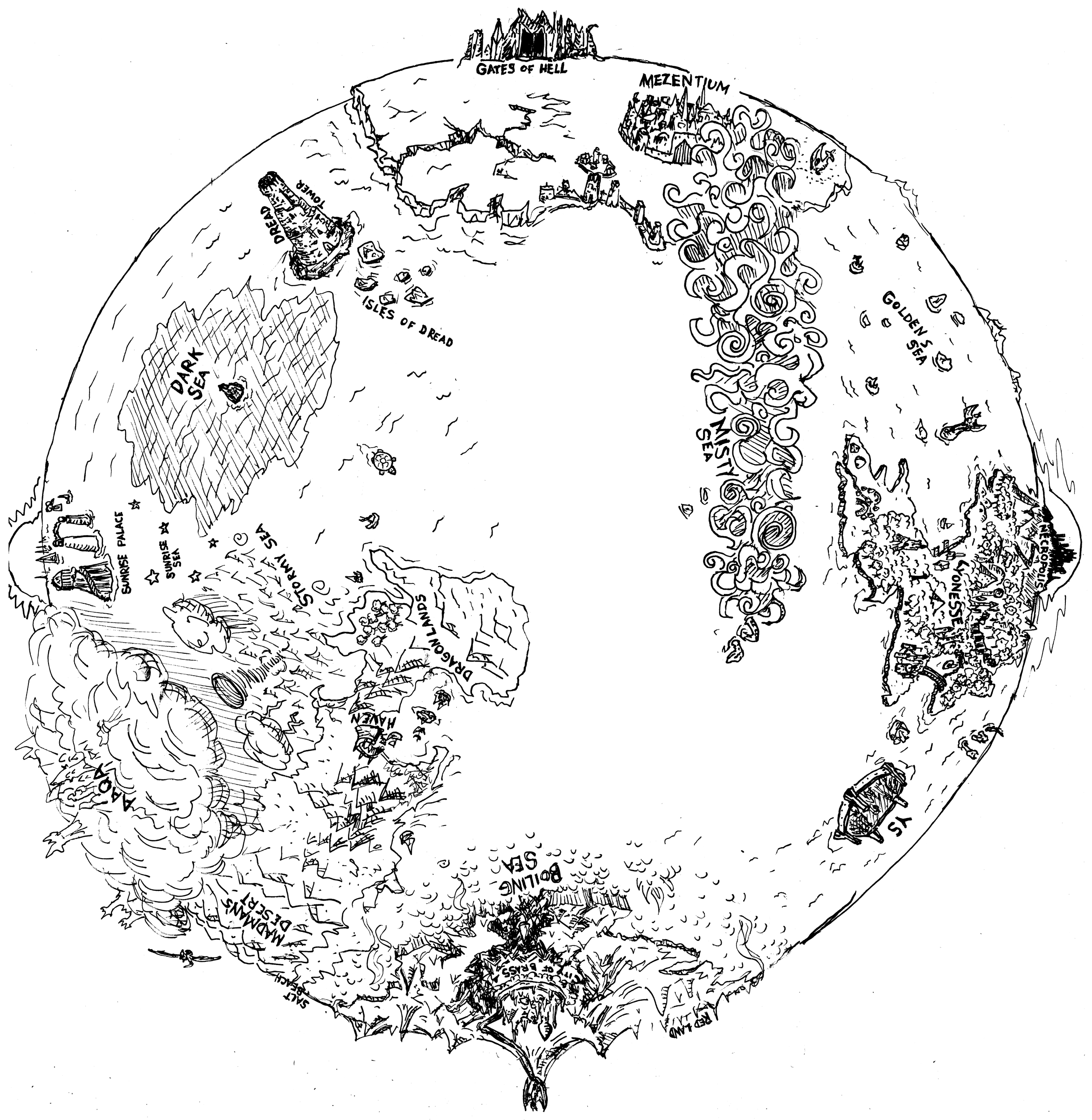
    Here’s a copy of my map with the center left blank for your own continent:

    emptyglobe

    use pokemon for your exotic monsters

    Wednesday, February 12th, 2014

    The PCs travel to a distant continent, another planet, or a nightmare dimension. Where are you going to get an entire ecology of weird, exotic, never-before-seen D&D monsters?

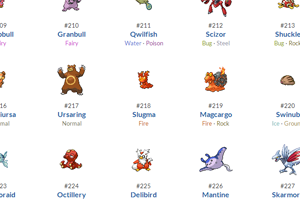
    pok1If you bookmark a list of pokemon, you have almost 1000 new mosters at your fingertips. Don’t use the original 151 pokemon: everyone knows what Pikachu looks like, and maybe one of your players had a Game Boy back in the day and can rattle off a bunch from the first game. But not a lot of people are familiar with the hundreds of pokemon from the second through sixth generation. And even if they might recognize a name or a sprite, will they be able to place a description?

    You don’t have to know anything about pokemon. Just pick a critter and describe it.

    “The water is alive with what look like scuttling, severed dragon heads. On closer inspection, you see that the ‘heads’ are actually the grossly disproportionate right claws of tiny crabs. The huge claws have fake eyes and very real jagged teeth.”

    pok2That’s #693, Clawitzer.

    “A huge metal bell floats in front of the dungeon door. Manic red eyes stare at you from the bell’s face: between the eyes, a mouth jabbers and gnashes horrid teeth.”

    That’s #437, Bronzong.

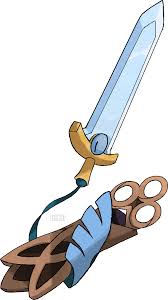
    “A floating sword slices the air in front of you. Trailing from its pommel is a long silk cord and an elaborate sheath.”

    pok3#679, Honedge. Maybe not a great Pokemon but a good D&D monster.

    Sure, there are plenty of duds: “You see a floating keyring.” (#707, Klefki) “OK, this guy is like… a sumo wrestler with… a novelty foam hand?” #297, Hariyama) but the Monster Manual has some duds too: we ignore ’em.

    If you examine them closely, Pokemon have a curiously unsettling quality. There’s something about them that makes you feel like you’ve descended into a world of madness. Come to think of it, they might make a great population of savage flora and fauna for the Far Realm, competing with beholders and grell for mastery of that plane of horrors.

    astral plane: oh yeah, stars

    Friday, February 7th, 2014

    In my last post I talked about how the Astral Plane takes different forms depending on how you enter it: on an astral ship you sail the Astral Sea; from a Manual of the Planes you explore the Astral Library; etc. But however you experience it, it’s all the same place.

    I forgot one major incarnation of the Astral Plane: space. (Duh. “Astral” does mean “starry”, after all.)

    What is the Astral Plane? It’s a big bunch of nothing connecting a bunch of interesting nodes (planar gates, or astral islands in 4e). It maps pretty well onto space travel. Now we know another way to enter the Astral Plane: launch ourselves into orbit. Spelljammer’s Wildspace is just another manifestation of the Astral Plane.

    When your D&D characters steal a spaceship, or hop on the back of a cosmic dragon, or teleport to the Warden colony ship, what can they expect to find out there where no adventurer has gone before? The usual sci-fi fare. A water world. A world ruled by gods. A dead world poisoned by a mind flayer empire. Just the same sort of places you could find by plane-hopping.

    i figured out the astral plane

    Tuesday, February 4th, 2014

    I’ve complained about the astral plane before: I never had a use for “a great, endless sphere of clear silvery sky” which is primarily used to get to more interesting places. However, I found myself using an astral plane in the mearls sidebar game, with one little tweak.

    Your perception of the astral plane is determined by how you enter it. For instance, in the sidebar game, you dive into a pool to travel to the fairy realm. Along the way, you pass through the astral plane: since you enter it through a pool, it takes the form of a vast ocean. Elsewhere in the world, a forgotten corridor in a library might lead you into the Astral Plane. In that case, you’d experience the entire plane as an infinite, labyrinthine library.

    EVENTIDE_by_ANTIFAN_REALThe advantage of this change: Every time you enter the plane by a different method, the DM can describe it differently, coming up with a unique, and potentially flavorful, setting with new puzzles and challenges. An Astral spell might take you to the standard, boring silvery-sky plane. The magical rings from Magician’s Nephew take you to a forest, an “in between place” filled with portal ponds. An astral ship takes you to the 4e version of the Astral Plane, a silver sea dotted with islands. If people entered the plane by each of these methods, they might perceive the same group of githyanki raiders as simultaneously flying through the air, running through the forest, and sailing a ship through the ocean. Each perception is 100% factually correct: after all, any physicality in the Astral Plane is just an analogy clothing an ineffable spiritual ideal.

    Here’s an adventure complication: you find a map of part of the astral plane. It’s a classic pirate treasure map, with islands and shoals. When you enter the plane via a library, you have to navigate the Astral Library using your map of the Astral Sea.

    guest post: over the top campaigns

    Thursday, January 30th, 2014

    Jason from Two Kings Games / Gygax Fund is filling in for me this week, with three gonzo campaign conceits:

    dh
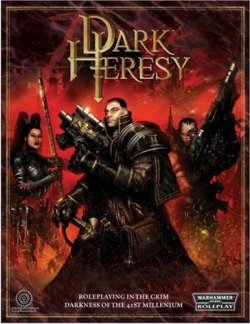
    So, I recently had the chance to try Dark Heresy, a RPG by Fantasy Flight Games. Like most other games, it does certain things very well and others could have possibly been done better (which could honestly be said about almost every game out here, I’d think). After sitting down with my group to start playing, the first thing they did was hand me my pregen. Then they began to unfold how my Psyker character fit into the Dark Heresy lore. As they wove the setting’s story and elements it was quickly obvious that there is no shortage of over-the-top dramatic elements that come along with the WarHammer 40K universe. One example was that the books made mention of an undying ever-sleeping emperor who is fed thousands of souls a day to be kept alive and thus, through his “spirit”, keeps open the mythical energy that allows interplanetary spaceflight. Sounds like something ripped out of a Megadeth song. This sparked my imagination and I felt it would be fun to come up my own over-the-top dramatic campaign setting elements to share with all of you. I hope you enjoy ’em!

    The Nine Dragons of Nol
    The Nine Dragons of Nol are as old as time itself and the universe lives and dies by their whim alone. Their breath is the wind, the seas their tears and the stars are the embers of their flames. Some say they are reality themselves. Others say the dragons are merely powerful bullies who feed off of the fear of men. Perhaps there’s a little truth to both stories. Once a week, the Nine Dragons require the Kingdoms of Men to offer up 200 wagons of gold and precious gems (equaling roughly 400,000 gold pieces) or suffer utter destruction. Of course, adventurers are set off into the world to seek and collect treasure as fast and furiously as possible, in order to keep the world safe from the all-powerful Nine.

    pitThe World-Eater
    You live in a world ravaged by ice and snow. Large woolly beasts roam the tundra and a frozen death is always waiting around every corner. According to legend, the world will stay frozen until Boonz, the god of the underworld, has had his fill of sacrifices. A giant pit, half a mile wide, sits guarded by the Umbrish Monks in the north continent. The monks have taken a lifelong vow to keep the pit safe and more importantly to ensure that the pit is fed flesh, daily. All tribes, kingdoms, and free men must send half of their already scarce supplies of meat and other hunted animals north to the monks for the daily sacrifice. Those who do not comply are held in contempt by the Umbrish and then must be forced to offer human sacrifice. It is believed that one day, with enough sacrifice, the world will once more feel the warmth of spring and the never ending winter will end. Legend dictates that if the offerings stop, the world will become nothing more than a frozen ball of ice, uninhabited by even the hardiest of life. In reality, a world-eater, a planet sized parasite, crashed into the world thousands of years ago and borrowed deep beneath the surface. It feeds on the core of the planet, thus slowly killing it, if not fed regularly.

    The Kingdom of Blind Men
    The Kingdom of Bray, hidden deep in the valleys of the Bluecap Mountains, is ruled by the enchanting and beautiful immortal elven queen, Queen Raween Belladonna. In fact, the queen is so enchanting that anyone entering the Kingdom of Bray has had their sight removed permanently, either magically or otherwise… Even newborn children are stripped of their sight on the day they’re born. The subjects of Bray, who seem to be fanatics for their queen, are trained at birth to use their other senses so acutely that they’re able to function completely without sight and are taught at a young age that the sacrifice they’ve made strengthens them and brings them closer to the gods.
    Oh, also the Kingdom of Bray is well known for its most perfect statues… 😉

    Dinner Rolls: or, this orc is the banana, this orc is the brandy

    Thursday, January 23rd, 2014

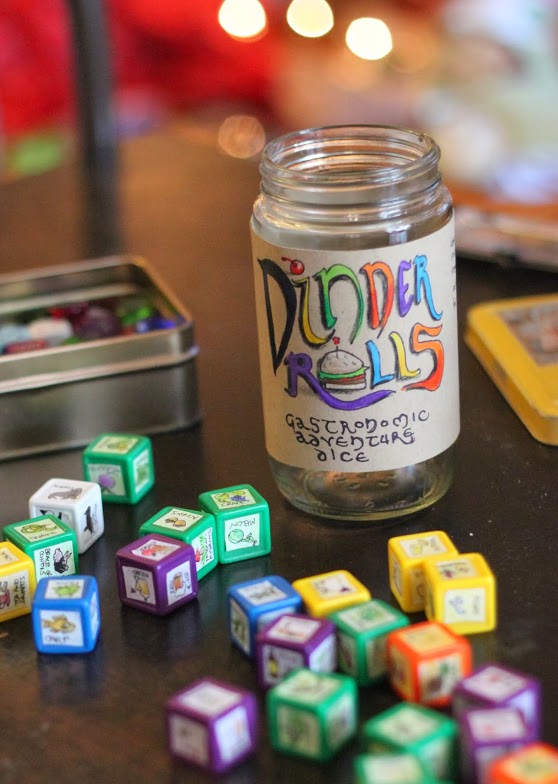
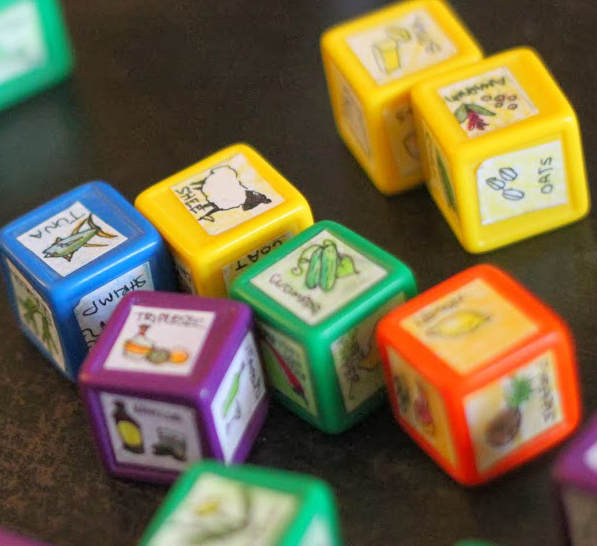
    IMG_9064My sister Laura, who’s a D&D player and artist, made me these dice for Christmas:

    There are 24 dice total, so that means Laura drew 144 tiny, beautiful pictures of food. She tells me that she stole the idea from some other product she saw but didn’t buy – presumably Recipe Dice. Laura’s dice are more D&D-themed: I bet the Recipe Dice don’t have so many forageable plants, mead, and so on.

    Laura decided I needed the dice after playing in my food-focused run-through of Isle of Dread. My players were always making Nature checks to find unique toppings for their pizzeria. If only I’d had these dice then!

    It’s great to have a collection of niche specialty dice, and they’ll come in handy whenever the ranger looks for food, but there’s another reason why a bunch of these dice made it into my travel dice box:

    When I DM, I’m often too lazy to use real minis. I often use d6es instead. With their faces turned to 1, 2, 3, 4, 5, and 6, it’s easy to keep track of who’s attacking who: “Which orc do you hit?” “#4.” The problems with this classic technique are that 1) no matter how many d6es you have, you’re limited to sets of 6 monsters, and 2) the rogue is likely to scoop up your minis to roll sneak attack damage.

    fooddiceNow replace the d6es with a large number of non-numeric dice. The images on the dice are irrelevant, just so they’re unique. The dice make whimsical minis: “Which orc do you hit?” “The banana.” You’re limited only by the number of dice you own. You don’t need to carefully turn the faces up to specific numbers: you can roll a handful and play them as they lie. And they’re useless for rolling sneak attack damage, so the rogue won’t steal them.

    Laura’s not gonna hand-draw you another set of Dinner Rolls dice, and you can’t have mine, but you can get most of the same benefits by picking up some Recipe Dice or Rory’s Story cubes or similar picture dice.