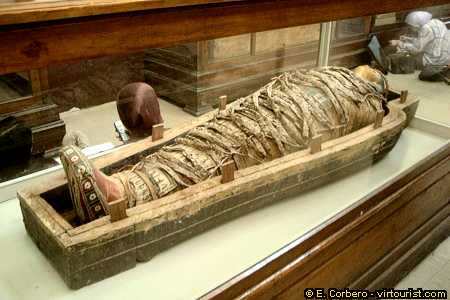
 In honor of Halloween, it’s mummy week at blogofholding! All mummies, all week!
Mummies have had a rough ride. They’re the afterthought of the undead, in D&D as in pop culture.
It’s easy to drop a vampire in to an adventure because they’re generic; sure, Count Dracula is Transylvanian, but it’s easy to imagine a vampire from elsewhere. Mummies, on the other hand, are tied to a specific Earthly time and place. Just as you can’t have the party fight Franklin Delano Roosevelt without explaining how he got from 1930s USA, it’s hard to drop a mummy into an adventure without dropping in Egypt too. If you include a mummy, do you include heiroglyphics? Pyramids? A stripy King Tut beard?
There are 3 ways you can go with mummies:
Crazy Funhouse Dungeon Land. You roll on Wandering Monster table VII and get a mummy. You look up the mummy description: you see that the “No. Appearing” column says 2-8, so you roll the dice and the party fights 6 mummies. That’s just how it goes in Crazy Funhouse Dungeon.
Egypt Land. You put an Egypt-flavored ancient civilization in your campaign world. In a RPG that revolves around robbing tombs, that’s not terribly hard to work in. You probably throw the mummy into a trapped tomb into a desert; you might include a sphinx as well. Pyramids are optional, but maybe a little too much?
The problem with this approach (if it is a problem) is that this adventure will feel very Egyptian, and not very, say, Greyhawk.
Mummy in a Strange Land. You reflavor the mummy with a bizarre new origin, sufficiently different that it doesn’t read as an Egypt analogue. For instance, mummies are the keepers of a vast extradimensional library. When a librarian dies, he is swathed in book pages related to his area of expertise. He is then brought to unlife as a mummy so that he can continue his librarian duties, but as a mummy, he knows only what is written on the pages of his wrappings. Mummies are often encountered in dungeons searching for ancient books to add to their mummy wrappings. (Am I vaguely remembering this from something I read, or did I make this up?)
Reflavoring the mummy is an uphill struggle, because the Egypt mummy story is so well-established that it will take a pretty strong flavor to overpower it.