every book’s a sourcebook: The Ginger Star

September 24th, 2010

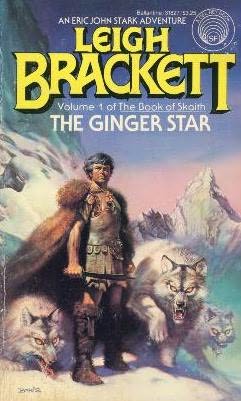
The Ginger Star by Leigh Brackett

The Ginger Star by Leigh Brackett

The Ginger Star, by Leigh Brackett – the first of the Eric John Stark sci-fi series – is chock full of D&D-inspiring goodness, which is not surprising because Leigh Brackett inspired her way into Appendex N. It’s technically sci-fi because there’s space, but between the space-ship landings at the beginning and the end it reads like fantasy. Over the course of a Fellowship of the Ring-style overland journey, Stark encounters guys who are described as looking like trolls, wizards (whose magic really works), and short, squat men who like to forge iron.

D&D-ready encounters of note:

  • A toll drawbridge over an otherwise impassable gorge. On each side of the drawbridge is a bridgehouse that controls its own half of the bridge; both sides most be down for people to cross. If you kill everyone on one side, the people on the other side won’t let you up. Also, if the tollkeepers feel like it, they can lift one half of the bridge, cornering you on the other.
  • A winter wizard who attacks you from afar with a killing frost. I’d run this as a more elaborate skill challenge than most, with uses for action points, fire-based attack powers, burnable items. The penalty for failure in the skill challenge, as is true for many combat encounters, would be death. Every skill challenge can’t be toothless.
  • A land of cannibalistic ghoul tribes – but the ghouls aren’t ghouls, they’re savage, hungry humans. There are a lot of monsters that are Other trying to eat Us. It might be scary to fight Us trying to eat Us.

    Overall, the book gives the impression of a world, like Middle Earth, that has more and less dangerous “zones”. Eric John Stark is a typical pulp-fiction badass, and in the beginning of the book, in the South, he is the baddest ass in the room. As he heads north, he travels through progressively higher-level areas until he is routinely being defeated and captured.

  • symbol of the Crossed Tree

    September 23rd, 2010

    The PCs find a map marked with a symbol that looks like an ornate X. Arcana checks reveal that it is the Vrksah, the tiefling symbol of the Crossed Tree. Nature checks reveal that wherever two living treetrunks cross is a weak place; here a gate may naturally form, connecting to a similar crossed-tree configuration somewhere else in the world. Thus, a farmer may go for a walk in his own orchard, and, before he realizes that he has left his property, find himself on an entirely different continent. No one knows the locations of more than a handful of crossed tree gates, except perhaps the druids.

    Crossed trees can be used as a way for the party to collect fast-travel shortcuts to important parts of the world. They can be an alternative or supplement to 4e teleportation circles, perhaps one more suitable for primal parties. Less prosaically, they may also lead the party to haunted fey groves, shadow forests where trees with human faces scream and mock, or trapped apple orchards where adventurers enter but never return: or if they do, they come back sown with evil seeds.

    Skill Challenges and DCs in the Rules Compendium!

    September 22nd, 2010

    What, you thought we were only liveblogging Heroes of the Fallen Lands? You’re only 95% right!

    I like a lot of the changes/clarifications for running skill challenges and determining DCs in the Rules Compendium. My thoughts below:

    • 2nd Use of a Skill ups the DC: I like that the 2nd use of a skill ups the DC to hard. That’s a great way to encourage people to dip into multiple skills during skill challenges instead of always relying on their best possible modifier.
    • Typical DCs: On one hand, I like guidelines for typical DCs. On the other hand, I suspect that in a lot of cases, I’ll have to ignore them and use the Hard DCs instead for most encounters, since it’s likely a player is going to be able to come up with a skill they are trained in for a skill challenge.
    • Primary and Secondary Skills: The section on primary and secondary skills is good advice. Having secondary skills, which can only be used once (and include creative uses of skills), take up about one third of the total skills usable in a skill challenge seems like a pretty nice mix.
    • New DCs: I like the new DCs quite a bit. A 65% chance of success sounds about right for the different levels of difficulty (totally unskilled for Easy Checks, good modifier or skilled for Moderate, and skilled with a good modifier for Hard checks). In terms of the assumption for skilled with a good modifier, it looks like they threw a +2 in there for good measure, which is probably a good idea since one can easily get that with a background or a racial bonus.
    • Group Checks: I’m not sold on group checks using an easy modifier. If you assume everyone is unskilled and has a 65% chance of success, then a party of 5 will succeed about 75% of the time (thanks to my girlfriend Alison for helping me with the math!), which is 10% more likely than the base assumption for single skill checks. When you figure at least one person is probably guaranteed a success, I’m sure the chances shoot up higher. I suppose this is mitigated somewhat by the people who might have lower than average chances of succeeding, however, due to armor penalties and low scores. All in all, I suspect group checks will be a cake walk in the current system, which granted is a lot more preferable to the virtual auto fail they used to be when everyone needed to succeed for the group to pass.
    • Advantages: The basic idea with advantages is that they make some skill checks in a skill challenge easier or count more than others. So a certain skill check might count for two successes or be against an easy difficulty. The DM can decide ahead of time that a skill check will have an advantage or could decide to apply one on the spot due to excellent roleplaying or a truly awesome roll. I like advantages because they offer a chance to mix up skill challenges and give them a little more depth; it seems like it would be fun as a player to hone in on the skills that would be appropriate, like maybe the first intimidate check against the cowardly duke is against an easy DC or thinking to question the boy who witnessed the gnoll attack will yield two successes. On the other hand, skill challenges that are too difficult has never been a problem I’ve run into, so I will use these sparingly or only when particularly appropriate!

    More Essentials thoughts…

    the coming crisis: D&D edition

    September 21st, 2010

    Christoph at Free Spacer has a post wondering if technical aids (iPad apps, for instance) will lead to sprawling game rules. In general, my optimism is almost Pollyanna-ish, but I agree that this is something worth considering.

    Pencil and paper RPG rules have opposed forces acting on them:

    an urge towards simulation creates complicated rules, and
    irritation with recordkeeping pares them down.

    This iterative process (theoretically) removes dud rules that don’t pull their weight. It’s responsible for a lot of the evolution of the D&D ruleset. (Of course, “dud” is relative: some may argue that the 1e harlot table added to the depth of the game world, and the pared-down 4e skill list doesn’t provide enough scope for epic-level rope use.)
    Read the rest of this entry »

    Mazes and Monsters retro clone 7: beware of the sacrilege!

    September 20th, 2010

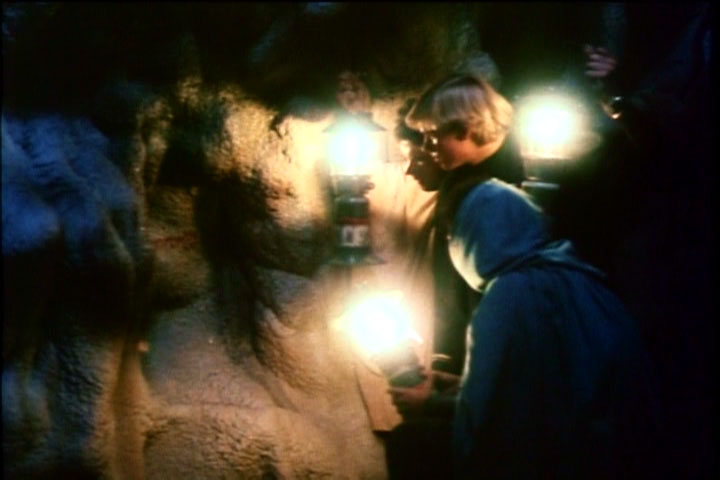
    We last left off with Tom Hanks and his friends in the middle of a new, LARP-enhanced version of Mazes and Monsters. They just encountered a skeleton, so we should finally get a chance to see how they’ll handle combat so we can find out how that mechanic works, and… oh. Oh. They’re not going to fight the skeleton. They’re going to talk to each other. Roleplay.

    Girl: Perhaps there is a clue hidden in the skull!
    Hanks: (in a squeaky, panicked voice) Beware of the sacrilege!
    Girl: Glacia the fighter is not afraid.

    As Glacia the fighter approaches the skeleton, it is suddenly pulled up, out of the shot; presumably by a system of ropes and pulleys rigged up by Jay Jay, who, in addition to free run of the Theater Department and Anatomy Skeleton Department, apparently has the key to the Ropes and Pulleys Department. Either things are invisible when they are on the ceiling, or the characters can only see things in-frame, or Jay Jay’s system of ropes and pulleys pulls the skeleton down the tunnel and around the bend, because the skeleton, mouth flashlight and all, is now gone.

    Showing bizarre and amazing lumination-location memory, Blondie says, “Look! where the light was pointing!”

    Look! Where the light was pointing!


    Read the rest of this entry »

    D&Doubloons

    September 17th, 2010

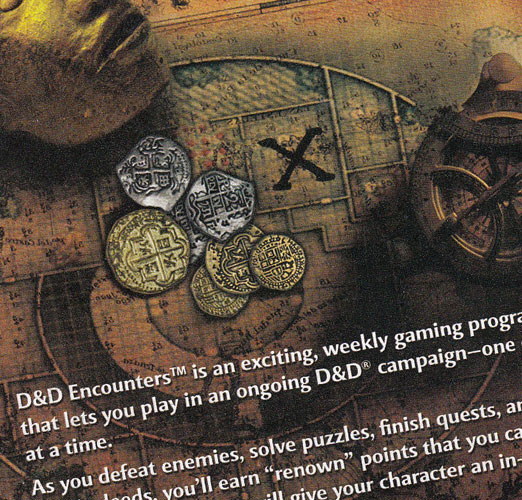
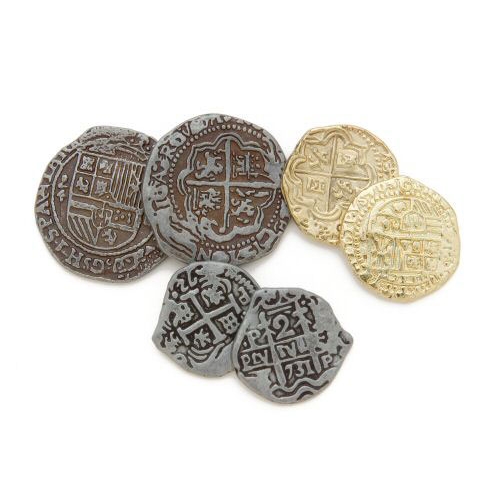
    The last page of Heroes of the Fallen Lands is an ad for D&D Encounters. There are lots of D&D props lying around: candles, maps, gold idols… and Spanish doubloons!

    D&D Encounters

    Spanish doubloons

    My guess is that this is paving the way for the next official campaign setting: 16th century Spain! What D&D player hasn’t dreamed of playing Don Quixote, or Pablos from Quevedo’s El Buscon, or Mendoza from Mysterious Cities of Gold.

    And, as there are no more pages, we’re done blogging Heroes of the Fallen Lands! Back to one post a day for us.

    More Essentials thoughts…

    common magic items

    September 17th, 2010

    Here’s the list of common magic items in Heroes of the Fallen Lands:

    Black Iron Armor
    Magic Armor
    Sylvan Armor
    Veteran’s Armor
    Defensive Weapon
    Magic Weapon
    Vicious Weapon
    Magic Orb/Staff/Wand
    Bracers of Mighty Striking
    Shield of Deflection
    Boots of Striding
    Burglar’s Gloves
    Diadem of Acuity
    Goggles of Night
    Helm of Battle
    Amulet of Protection
    Elven Cloak
    Safewing Amulet
    Belt of Vigor
    Potions of healing/life/recovery/vitality

    It’s not a bad list of simple magic items, although I think that the Vicious Weapon, which has one of the better weapon powers, will overshadow a lot of Uncommon weapons.

    This is not the complete list of 4e Common items, by the way: the complete list, along with other Essentials rule changes, is here.

    Uncommon Items

    Also included (for fun?) are a handful of Uncommon items, which players can’t get except from DM loot drops. I’m not sure why they’re included in this book.

    Orb of Insurmountable Force
    Earthroot Staff
    Wand of the Hunting Hound
    Gauntlets of Blood

    I guess these are in here so that wizards, rogues, and fighters can have something to salivate over. The cleric is playing a cleric, so he’s used to disappointment.

    More Essentials thoughts…

    Feats from Heroes of the Fallen Lands

    September 17th, 2010

    Expertise Feats

    Heroes of the Fallen Land offers a slew of new expertise feats and a change to weapon focus to limit it only to implements (while simultaneously bringing in implement focus to the mix). Consequences below:

    1. More Errata Anyone?: Expertise feats released prior to HotFL increased to a +2 bonus at 15th level and a +3 bonus at 25th level, where as these new ones increase at 11th and 21st. This leaves people with weird implements, such as tomes, or people who use multiple implements and want to take advantage of versatile expertise, in an annoying situation of waiting several levels to catch up to their fellow players using trendier implements and weapons. Obviously this an oversight that any DM with brains will house rule, but it probably should be errata’d for official events and the like.
    2. Racial Powers: A minor gripe, but I always think of it when a new expertise feat comes out. Racial powers are still left in the dust, falling 1-3 points behind the attack rolls of other powers since they have no applicable expertise feats to help them.
    3. Hello Implement Focus!: This is a feat spell casters have been waiting a long time to get. Coordinating the ability scores and the powers needed to get any use out of the energy boosting damage feats was a chore that usually couldn’t work out and wasn’t worth a relatively modest boost to damage. Implemented Expertise makes it simple.
    4. Where is the love for weapon/implement dependency?: A lot has been done for classes that rely, or choose to use, multiple implements and weapons as part of their build. For example, there are several weapons available, such as the bard’s songblade, that count as a weapon and an implement, thus eliminating the need to purchase/discover an extra magic item. HotFL come out with a very nice expertise feat, Master at Arms, that allows a warrior to get a bonus to attacks with all weapons, without having to grab up a bunch of new feats. Unfortunately, the focus feats still miss the mark, and the recent change to weapon focus has taken away the ability to snatch an easy damage bonus for a weapon used both as a weapon and an implement (such as a pact blade or songblade). It’s a fairly minor bonus, sure, probably 5-10% of the damage you do, but it’s not entirely unconsequential, and it would be nice to be able to add damage to both types of attacks without having to take an extra feat.
    5. House Rules: A house rule I’ve been using, which I understand is in use by some folks from WotC as well, is to give everyone a special version of expertise that gives a feat bonus that scales with level to all attacks. The reasoning is that expertise is a 100% must have feat that seems like it was put in more to fix a numbers issue with monster defenses increasing too swiftly relative to PC attack bonuses than any other compelling reason. With the advent of all these new expertise feats, I’m trying to decide what to do! I think I might experiment with allowing someone to swap in one of these feats in place of my generic expertise feats. This way, if they really do plan on ultra-specializing with one weapon or implement (which probably 75% of all classes do), they can take one of these feats. If they want ultimate flexibility with weapons, implements, and racial powers, they can keep my made-up feat.

    Other Feats

    Aside from the expertise feats and implement focus, which I’ve already covered, there are some pretty BOSS feats in Heroes of the Forgotten Lands! Highlights follow:

    Disciple of Lore: This feats gives a +1 bonus to skills with which you have training. A pretty efficient feat when you consider how many skills can get the bonus, and fun for maxing out skills with all possible bonuses!

    Improved Defenses: Wow, a feat that gives a +1 to all non AC defenses that scales with tier, making it twice as good as Paragon Defenses, which I almost always tried to take if at all possible! The only reason I could see for not taking this feat is that other superior feats for boosting specific defenses while giving other bonuses that I discuss below. Other than that, I suppose there are one or two classes that are so jam packed with crazy powerful feats, that they just don’t have time to take this one, but in my experience, those classes are few and far between.

    Melee Training: An errata’d version of the old feat, which brings the power level down a bit. A necessary evil, to stop the purely dex based slayer and other potentially crazy builds with the new figher and rogue. A moment of silence, please, for all the builds that are taking a minor hit so that the warrior and rogue could use basic attacks as their only method of attacking…

    Resilient Focus: Dude, I remember when only humans and half-elves could get a +2 bonus to Saving Throws and then only if they had spent an Action Point. Very close to being a must take for all classes by Paragon Tier (when status effects get nasty).

    Superior Fortitude: Wow, a feat that gives +2 Fort AND resist versus ongoing damage that scales with tier! Why does it scale with tier anyway? This feat is noticably better than it’s paragon tier counterpart, which granted, never got taken.

    Superior Reflexes: Another feat that combines two feats into one, giving a +2 to Reflexes that scales with tier and giving combat advantage against all enemies during your first turn in an encounter. Not amazing, but still a noticeable improvement!

    Superior Will: This is one that I think anyone should seriously consider taking: a feat that gives a +2 bonus to will that scales with tier AND allows you to make a ST at the beginning of your turn to end the effect of being dazed or stunned. The three worst offenders as far as status effects are dazed, stunned, and dominated (at least, for those that come up with any kind of regularity). Making a save at the beginning of your turn to end two of those is HUGE.

    Also, look how much better Swift Recovery is than Toughness:

    Swift Recovery: You gain a +3 feat bonus to your healing surge value. The bonus increases to +4 at 11th level and +5 at 21st level.

    Toughness: You gain 5 additional hit points. These additional hit points increase to 10 at 11th level and 15 at 21st level.

    More Essentials thoughts…

    Heroes of the Fallen Land Races!

    September 16th, 2010

    Props to the alternate ability modifiers for the classic races. So many possibilities open up for these races now that wasn’t present before:

    • Dwarf: Strength opens up dwarves for both fighters and barbarians! Dwarf has always been a solid race mechanically, with an awesome racial power (dwarven resilience) and a few great feats. In particular, Dwarven Weapon Training (+2 damage and proficiency with all axes and hammers!) and Shield the Fallen (adj. bloodied allies get +2 to all STs and Defenses!) are both very powerful and work well for either a fighter or a barbarian. It was always tempting to play either one as a dwarf already but the lack of a primary ability score always kept me away. Now I have no excuse!
    • Eladrin: Another awesome race that was crippled by having Dex and Int as primary scores, making for only a handful of good builds (wand wizard comes to mind). Adding Charisma into the mix really opens the class up for both Bards and Warlocks. Fey step is such a nice racial power that I can definitely see considering Eladrin for either of those classes.
    • Elf: Int/Dex is a weird combination. I know some classes use it. An obscure rogue build sure does. In any case, elves have one of those awesome racial powers that is super useful, elven accuracy, so for those classes that can use those stats, elf will be high on the list, I’m sure.
    • Halfling: Dex/Con is another one of those combinations that doesn’t see a ton of use, though the idea of a super dark and creepy Halfling assassin does have some appeal!
    • Human: Humans don’t get any ability mods, but heroic defense is yet another example of one of those awesome super useful racial feats. Getting a bonus to either an attack roll or a saving throw when you miss is huge. At higher levels failing a saving throw can be very rough, so the party really needs a nice group of powers they can draw one and so having a flexible like this one is awesome. My only regret is that I doubt I’ll be able to bring myself to take a third at-will anymore when I play a human (which is fun if not usually super useful!) since this power is definitely one of the crucial use at just the right time abilities!

    More Essentials thoughts…

    friends don’t disintegrate each other

    September 16th, 2010

    This level 2 wizard utility power from HotFL is a pretty faithful 4e interpretation of Charm Person, which has been missing from the edition so far. It doesn’t have 1e’s sliding duration based on the target’s Intelligence, which is sad, but on the other hand, it is explicit about what happens when the charm wears off. That’s something that always puzzled me ever since Bargle first Charmed me in the Red Box.

    Instant Friends is kooky in that it doesn’t use an attack roll to judge success, but a saving throw. That’s fun because it gives a level-1 wizard a chance (although a small one) to make a friend of a level 27 Storm Titan. What the heck, why not give it a try? (Don’t bother with Orcus, though; he get a +5 on saving throws.)

    Wow, a pretty potent utility power for level 2. This seems too fun not to take, especially since a wizard can hide this in their spellbook and bust it out when they aren’t planning to get into a lot of fights that day. I’m not sure how I feel about this; I get nervous when spells become available that risk trivializing skills (i.e. diplomacy), but then again the saving throw does make this pretty risky (though spell focus, as always, throws a monkey wrench into things).

    Disintegrate

    Yeah, but ONCE PER DAY, Emirikol. That’s a daily power. Let’s not go crazy disintegrating these townspeople.

    More Essentials thoughts…