D&D 4e Item Issues

August 18th, 2010

One of the announcements at Gen Con was that with the release of essentials  items will now come in three rarities: common, uncommon, and rare. To summarize:

  • Rare items can’t be created by players. They’re very special, and the general idea is that a player will have maybe one of these in their possession at any given time.
  • Uncommon items also can’t be created by players, and are the purview of the DM with maybe a few exceptions. Pretty much all magic items currently available are going to fall into this category (though I suspect your basic “magic item +X” will be common.
  • Common: These are easily purchasable and can be created by players. Again, my suspicion is that these are things like a basic magic item with no frills.

Revisiting items has gotten me thinking about the philosophy change behind items from 3.5 to 4th edition:

  • Christmas Tree Effect: 3.5 suffered from the Christmas tree effect, where players were often more defined by their items than by their abilities. A mid to high level character had a long list of items for boosting various defenses and stats that they basically had to go through to have a viable character. 4e is supposed to solve this by condensing the items a player HAS to take to just a few. Everything else is supposed to be supplementary, adding a cool power or property here or there but not overwhelming anything.
  • Items are special: An added bonus of this is supposed to be that items now feel more special. A +3 flaming sword is a lot cooler if it’s one of my three major magic items rather than one out of twelve or thirteen items I have on my check list as must haves.

So the question is, has 4e succeeded in this noble goal of cutting down the number of items a player needs and making them feel more unique?

My Answer: Yes, but only because the bar was set pretty low by 3.5. A character not only basically require a lot more items than it might appear at first glance, but certain items can dramatically effect the balance of a character, favoring certain builds more than they probably should.

I go through the goods and bads of items in 4e below: Read the rest of this entry »
D&D: vikings with ewers

August 17th, 2010

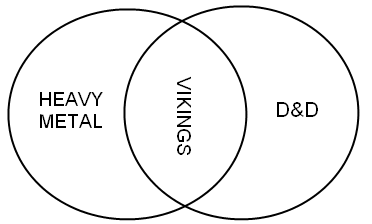
Inspired perhaps by Greywulf’s badass Thor cleric build from the D&D Essentials cleric preview, I’ve decided to run our Essentials trial game in the viking/Beowulf milieu. Somehow, I have never actually played in a viking game, although it is so 80’s D&D, as illustrated in the following Venn diagram:

With the Essentials Starter Set leaning on the early-D&D nostalgia button (reintroducing the terms “thief” and “backstab”, for instance) I think it’s time to pump up some Viking metal and prepare to journey from the frozen North.

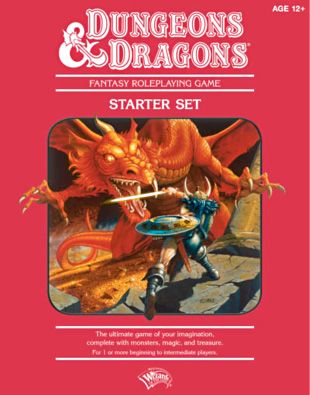
Speaking of 80s nostalgia and Vikings, take another look at the cover of the D&D Essentials Starter set (which uses the same art as the 80s red box).

D&D Essentials starter set

D&D Essentials starter set

Look at that guy fighting the dragon. Look at his horns. They’re like 2 feet long. That guy is a viking. If you’re not playing viking D&D, you’re Doing It Wrong.

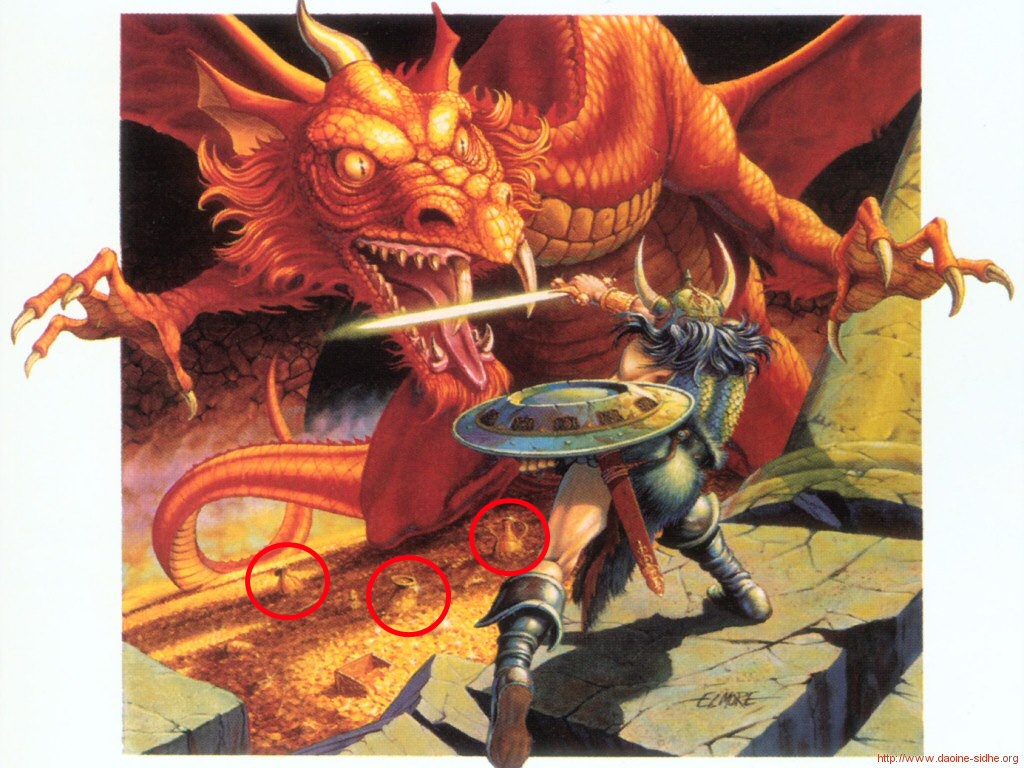
This illustration is so classic 80’s D&D that it should really serve as a road map to my Viking adventure. Besides the viking, we have a dragon – a strange-kneed dragon – and the setting is a dungeon floor of tumbled stones, with a vast treasure piled in the rift. Classic!

Take a look at the composition of the treasure though. The predominant treasure type is gold… glittering gold. As it should be. Then there’s what looks like a potion… a chest… and no less than three jugs.

click to zoom in

Are they jugs? Pitchers? Vases? Decanters? I think when they’re in treasure, they might be called ewers? Anyway, there are an excessive number of ewers in this dragon’s hoard.
Read the rest of this entry »
Mazes and Monsters retro-clone 5: It’s a Trap!

August 16th, 2010

the cleverest of all sprites

the cleverest of all sprites

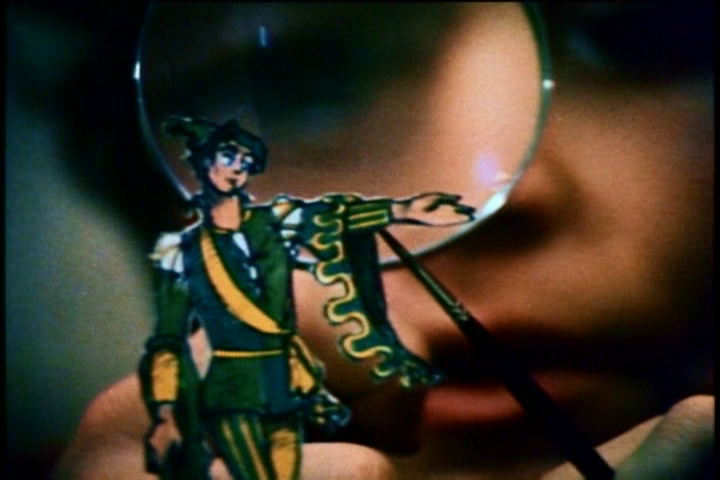
Last week’s game session over, we see JJ and Blondie hangin’ out together, painting some miniatures. You know. Like you do, as bros.

Here we see JJ with his magifying glass. It was probably part of, like, a Sherlock Holmes costume (JJ’s schtick is that he loves costumes). Who knows, maybe the magnifying glass will come in handy again if he ever gets a job as Construction Producer on “Handyman Superstar Challenge”.

So apparently Mazes and Monsters minis are made out of paper? or cardboard? Anyway, they’re flimsy — providing nothing like the honest, slightly-toxic solidity of the lead miniature that D&D was using at the same time. Mazes and Monster’s publisher (whoever it was) just never had the money TSR did to produce licensed gamepieces. Luckily, the Mazes and Monsters minis are always conveniently facing the camera, so it looks like they’re not quite as ramshackle as they are.
Read the rest of this entry »
Rory’s Pocket Guide to D&D 4e – Playing Combat

August 15th, 2010

I gave you some handy tips for Character Creation!

I set you straight on Roleplaying!

Now let’s focus on combat!

Combat

Combat in D&D is its own beast, and there are a lot of things to keep in mind when making decisions. In D&D 4e, the increased complexity can make for longer combats, so staying alert and knowing what to do is important!

  1. Make a game plan: When a combat starts and as it evolves, you should be making a game plan for how the encounter will be playing out. A few good questions to run through: Is this going to be a tough combat or is it just meant to drain my resources? Is there terrain I can take advantage of? What monsters should I be targeting? Should the party be staying close together or spreading out? Are there certain abilities that are going to be in high demand this combat, such as movement abilities, extra healing, and extra saving throws or bonuses? Being able to answer these questions will play a huge part in what resources you use and which abilities you know to keep track of so you aren’t left floundering when it comes time to act.
  2. The Three Action Tango: During other players’ turns you should usually be planning the three actions you’ll take on your turn: Standard, Move, and Minor. Obviously, you may need to reassess when your turn comes around since enemies might die or move around, but even a rough plan is VERY useful and will help the game run smoothly. For standard actions, you’re almost always looking at an attack power, so look through your encounters first and see if any are particularly appropriate; there is NO reason to be stingy with encounter powers. If not, turn to your trusty at-wills. If the fight is looking like it will be very difficult, go ahead and pop a daily if it will help the encounter significantly, since many have encounter long effects that will be more useful at the beginning of the battle than later on. For move actions, well, movement is pretty obvious, though keeping in mind that you can swap down to a minor is a good thing to do, especially for wizards who sometimes have multiple effects that they need to sustain. Think about where you’re going to need to move to get the best attack off, avoid dangerous situations, and get flanking bonuses. Finally, always think about something to do with your minor action. This will often mean popping a useful utility power, but it might also mean grabbing a potion or interacting in some way with the environment. Read the rest of this entry »
every book’s a sourcebook: African Civilizations: Ballana

August 13th, 2010

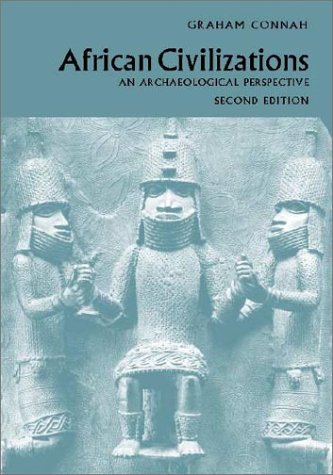
African Civilizations by Graham Connah

African Civilizations by Graham Connah

Last week I mentioned that I used a tomb from the Nubia chapter of African Civilizations by Graham Connah as the centerpiece of a dungeon delve. I recommend you do the same.

(The illustration is below.)
Read the rest of this entry »

gen con surprises

August 12th, 2010

character sheet

Starter set and counters

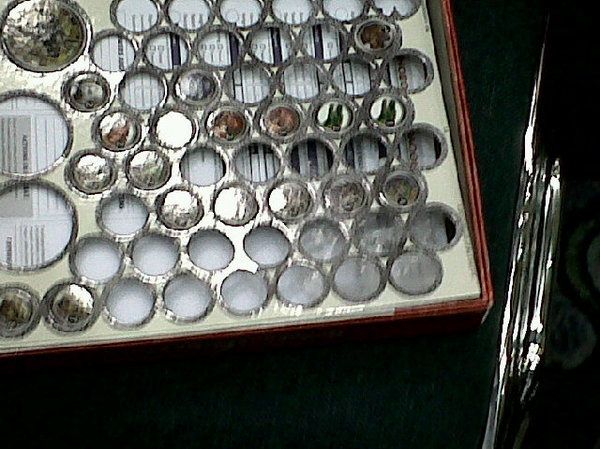
From newbiedm’s twitter pics: a picture of the Essentials monsters counters. But what can we read on that sheet behind the counters? What are those words in red on the top of the sheet? It looks like “Hobo” peeking through one hole, and “Moon” through another. Click to enlarge the picture if you can’t see it.

I speculate that D&D is changing its name to “Hobos & Moonshine.” D&D will now be about booze runners during the American prohibition.

As a reminder, my previous guess, that Rogue would change its name to Thief, was correct. In line with this new direction for the game, I predict that Fighter will change its name to Flatfoot, Cleric to Fed, and Wizard to Flapper.

Rory’s Pocket Guide to D&D 4E: Roleplaying your Character

August 11th, 2010

So you built a badass character using my previous advice in Character Creation. Good job! But now you’ve got to actually play the game. What should you do? How should you roleplay your character?
Roleplaying

  1. Be Selfish: In D&D, your primary goal as a player is to bath in your own glory and generally show off how awesome, interesting, or tragically heroic you are. At least that’s what I think. If you see an opportunity for your character to shine, take it! If you’re a good thief, be on the lookout for chances to scout ahead of the party and provide information, steal the king’s crown, and bluff the hell out of every Angel of Truth you come across. It’s a simple rule, but one that should always be in the forefront of your mind: how can I turn this situation to make my character appear more awesome and interesting?
  2. You’re the player, damn it, not your character: I get so annoyed when I see players say things like “Wilhelm would never go for this crazy scheme. He’ll stay behind in the inn while you guys seek out the Dragon of Death and then descend into the Sewers of Time to rescue the lost Prince of Sorrow.” Dude! You just wrote yourself out of several sessions! Not only have you made the game less fun for yourself, but you’ve made everyone else feel guilty for not including you. Read the rest of this entry »

sea dungeons

August 10th, 2010

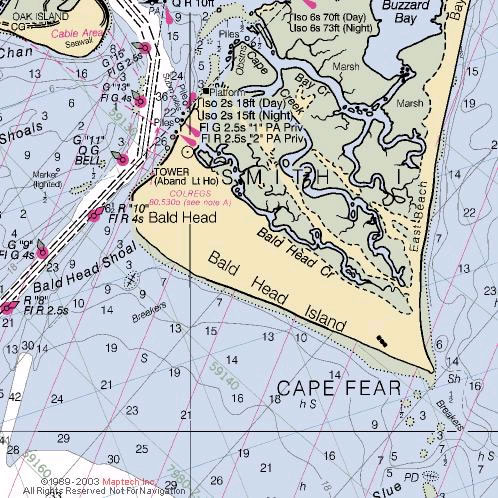
A nautical map – one with depth markings on it – can be a disguised dungeon setting.

Like a dungeon, it has constricted travel. If your ship draws 15 feet, you can’t sail through 10-foot-deep water. Those are like dungeon walls.

It’s a dungeon, though, where the walls are in different places for everybody. If your ship draws 20 feet, you have more walls than a ship that draws 10 feet.

I really should run a ship-to-ship combat among some reefs, where instead of drawing walls, I write depths on the battlemat (or just use a real nautical map). The larger, faster ships would have to sail around some obstacles that the smaller ships could ignore.

I have everything I need to run a pretty good sea combat. I have some “Pirates of the Spanish Main” ship minis, including a few galleys; and an 8-sided wind die, marked with the cardinal directions (N, NW W, etc.)

The die came with something called “Yachting: An Exciting Game” which turned out not to be exciting and in fact is only a game in the way that Candyland is a game. In yachting, apparently, the journey from the Atlantic to a port in Cape Cod is one in which the skipper is a powerless passenger at the mercy of the cruel winds which, 7 times out of 8, run the hapless ship aground. I think this might be a misrepresentation of yachting. Cute die, though, except when I accidentally roll for damage and get “Northwest”.

Mazes and Monsters retro-clone 4: love and character sheets

August 9th, 2010

A strange plant is growing in Tom Hanks’ heart… and its name is love. In a story repeated at so many gaming tables, the tank (Kate) is falling in love with the healer (Hanks).

Mazes and Monsters

What's that at the end of the maze? It's a heart!

I have to pause here. Mazes and Monsters has never got the recognition it deserved as one of Hanks’ most emotionally powerful love stories. Tom Hanks has been in a lot of movies – imdb lists 60, with another 15 in production – but Mazes and Monsters is one of the warmest and most romantic films he’s ever been in. I’d seriously put it in the top 3 Hanks love stories. Let’s go through some of his biggest roles:

  • Dragnet: A buddy movie; the other buddy gets the romantic subplot.
  • Big: Child in an adult body.
  • Turner & Hooch: A love story between a guy and a dog.
  • A League of Their Own: A baseball coach has a team of female players and doesn’t have a romance with any of them.
  • Sleepless in Seattle: A romantic comedy in which Hanks and the girl don’t actually spend any time in the same city.
  • Philadelphia: Antonia Banderas is presumably Hanks’ boyfriend, but they act like roommates.
  • Forrest Gump: OK, Forrest loves Jennay. So far, this is the only Hanks movie I’d put in the romantic class of Mazes and Monsters.
  • Apollo 13: Hanks spends the movie 205,500 miles away from his wife.
  • Saving Private Ryan: Hanks’ love for Private Ryan is never made explicit.
  • You’ve Got Mail: I haven’t seen this but I’m willing to give it the benefit of the doubt: maybe, unlike in Sleepless in Seattle, Tom Hanks and Meg Ryan actually meet and don’t JUST email each other.
  • Cast Away: Love story between a man and a volleyball.
  • The Polar Express: Love story between a Hanks and a Hanks.
  • The Da Vinci Code: The idea of anyone loving a man with that hair is clearly preposterous. Besides, *SPOILERS REDACTED* Jesus Hanks.

All I’m saying is, it’s unusual for a Hollywood leading man to be so asexual. Hanks’ heart will forever be barren and inhospitable to love, as if he left the Mazes and Monsters set with +3 bracers vs. Cupid’s arrow. Why? Could it be that he never forgot Kate? or could it be that his Mazes and Monsters obsession left him warped – a child in a man’s body (an echo of which we can see in Big)? Remember, not everyone is able to play at the Ninth Level. Perhaps Hanks was not ready for the demands Jaffe put upon him.

But that’s all in the future. Here, today, at this gaming session, Tom Hanks’ heart is very much alive. We see a montage of his eyes locking with Kate’s over the gaming table… him ducking under her umbrella… them jogging together. Sexy stuff! But for our purposes, the most important scene is the two of them working on their character sheets together.. We get screenshots!
Read the rest of this entry »

Gen Con Design and Development seminar 2: design, minis, races

August 6th, 2010

Adding more notes to go with yesterday’s seminar report (of which the highlights were: core books being republished, less feats in Essentials, skill challenges in Essentials)

1. There were some cool insights into the development process: in 2nd edition AD&D it was standard practice to give someone a major project and then not really hear much from them for 5-6 months, where as now the process usually involves a lot more people working together and looking over each others work.

2. Distinction between D&D designer and developer: This has probably been covered in other places, but the basic idea is that the designer is the one who basically writes the text and comes up with the story and rules. The developer is like an editor who goes over the rules and makes sure they fit with the current mechanics and are reasonably balanced. Then of course, the editor goes over the text and checks it for grammar and spelling and those sorts of things. And of course, as Rich Baker pointed out, the developer isn’t illiterate and the editors know the rules of the game so their jobs can overlap a bit.

3. Miniatures: Someone expressed concerns that D&D miniatures might stop being produced, but it sounds like WotC is just spacing out their release cycles on them a little bit to give retailers a chance to sell them. So, as should be evident with the recent release of Orcus and other stuff on the horizon, they won’t be going away any time soon.

4. Races won’t be as crazy common as they were in 3.5! Apparently in 3.5 there were something like 150+ playable races, which was kind of ridiculous! It was an intentional design decision to scale that down to more manageable levels and focus more on filling cool fantasy concepts for races (and sometimes making space for new ones as it seems appropriate) rather than take up a lot more space in books with races people don’t really need, especially since a 4th edition race description is a lot more involved and needs more support than a 3.5 one.