Author Archive

what not to read

Tuesday, August 3rd, 2010

Let me say this up front: I have pretty bad taste in fantasy novels. I say this because later on I’m probably going to say something bad about a book you like.

I really like sword-and-sorcery novels and sword-and-planet novels. Some S&S/S&P fiction is well-written; that is, however, not a requirement for me. I like pulp axesploitation Conan and Burroughs pastiches from the 60s and 70s. I will buy almost any book if its cover has a painting of a sweaty barbarian.

Extra points for each of the following:

  • barbarian is being fondled by a woman wearing a gold bikini
  • barbarian is astride a headless snakeman
  • bracers or torques are in evidence
  • barbarian is next to some braziers and/or thrones
  • behind the barbarian: a planet surrounded by stars! Extra points for a rocket ship
  • the barbarian has a super ugly face

(more…)

Mazes and Monsters retro-clone 3: meet the characters

Monday, August 2nd, 2010
This entry is part 3 of 34 in the series Mazes and Monsters

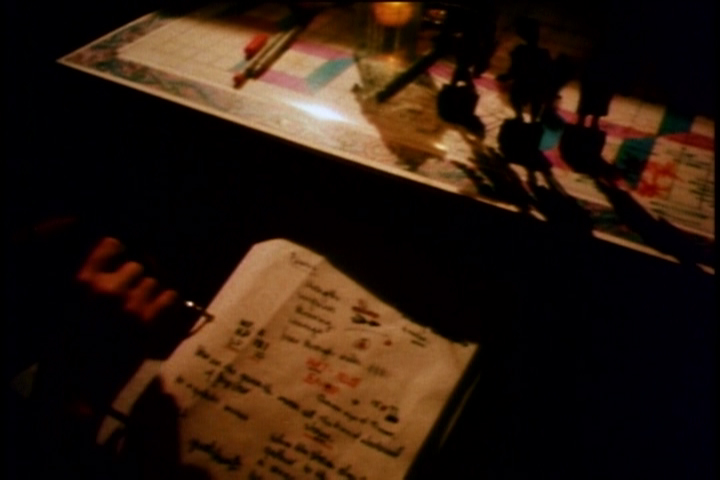
After last week’s extremely informative introduction to the game system, we get a shot, from one of the players’ point of view, of a character sheet and a corner of the game board.

character sheet

Unfortunately, it’s nearly impossible to read the character sheet. So much valuable rules information, lost, just because of lousy screen resolution! Squinting, I can sort of convince myself that the second word on the character sheet (after the character’s name?) is “strength”. The fourth word seems to end with “ing” (cunning?) and the fifth word looks like it ends with “ge” (courage?)
(more…)

every book’s a sourcebook: African Civilizations: An Archaeological Perspective

Friday, July 30th, 2010

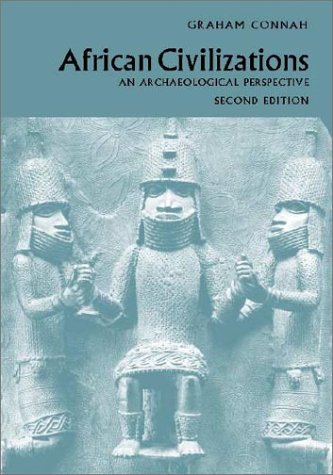
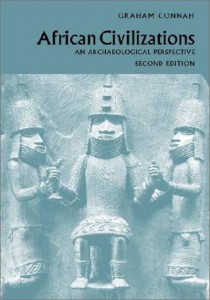
African Civilizations by Graham Connah

African Civilizations by Graham Connah

OK, African Civilizations: An Archaeological Perspective, by Graham Connah, is practically a literal sourcebook. It has dozens of maps of tombs, temples, and villages, as well as pictures of ancient treasure. And the best part of it is, because it details the non-Egyptian civilizations of Africa, this stuff is familiar to exactly NOBODY YOU KNOW. Some of the civilizations of Ethiopia, Nubia, and Zimbabwe were big, rich cultures, with impressive architecture, coinage, standing armies, and the rest of the trappings of powerful ancient and medieval kingdoms. Since they didn’t interact with Europe much until the colonial period, they are about as familiar as (or less familiar than) the kingdoms in a fantasy novel you haven’t read yet.

I’ve been slowly reading this book for a while. A few months ago, I used a map and a description of a queen’s burial chamber as the centerpiece for a dungeon. Today I was struck by a passage about the ephemeral nature of archaeology. Archaeology, after all, is what PCs do (at least, the Indiana Jones style of archaeology).

Because of the extensive excavation of the Aswan High Dam, we probably know more about Meroitic life in Lower Nubia than in either of the other two provinces.

That got me thinking about the plight of archaeologists, doing hasty, non-methodical excavations on a site that was going to be covered with water and totally destroyed. Unlike normal archaeology, you don’t take your time, catalogue, dig with a spoon. You dig up everything as fast as possible. Whatever you miss is gone forever.

Transfer that kind of pressure to a dungeon. Prepare a big, sprawling dungeon with lots of monsters, traps and treasure. Now place that dungeon in the bottom of a valley that’s about to be flooded forever: maybe one of the ancient dwarven dams is about to break. Make sure the monsters who live in the dungeon are nonsentient or eeevil, so the PCs don’t have to spend their time conducting an evacuation. The PCs have a limited time, say a day, to loot whatever they can from the dungeon. Heck, let’s make it an hour. That should turn up the pressure.

How can you structure this dungeon differently from most? You might be able to stock it more richly with treasure than most, because the players won’t have time to get to every part of it. When they stand on a nearby hill, watching the waves crash over the dungeon forever, you want them to be thinking regretfully of all the loot that’s still in there. To that end, you might want to tell the PCs exactly which of their wishlist items are fabled to be in the dungeon.

This would be an ideal dungeon to use some old-school, first-edition-style dungeon timekeeping. Determine how long it takes to search a room, how long to pass through a room, and how long to run a combat. I don’t like counting rounds, so I’d establish rules of thumb: every search check takes a minute; every combat takes a minute. In 4th edition, a short rest takes 5 minutes; that’s a pretty significant chunk of time if you only have an hour to explore.

Now that time is a resource, we can use it in ways we normally can’t. Normally the PCs can spend as long as they want on a task. If it takes 20 minutes to gather up all the silver pieces from the floor, the PCs will spend that long. But with the sand slipping through the hourglass, PCs will have to judge the possible benefits of skipping the silver.

You can also put something interesting in nearly every room, something that would repay careful investigation. Normally it’s not much of a roadblock for a PC to say “I keep on searching till I find something”, so hiding something is approximately the same as giving it to the PCs. Not so here.

Other ways to monetize time:

  • There’s a huge gold statue, but it’s so heavy that you’re slowed when you’re carrying it. If you have to find some way to pulley it across the chasm, that will increase its time cost.
  • A tunnel ends at a cave-in. There’s a small gap, too narrow to crawl through, beyond which you can see gleaming gold funeral masks. The gap could be widened with time.
  • A one-minute search check reveals a hidden lock that will require multiple Thievery checks to open, each of which will take a minute.
  • Every fight will eat up 1 to 6 minutes. If time is running short and the players haven’t found the Holy Avenger yet, maybe they want to bypass the skeleton guardian standing atop a pile of gems.

And then, of course, you dangle a big treasure before the players right as they’re planning to leave. If they take the bait, that will lead to more delays, and finally, a wild dash to safety pursued by a roaring tidal wave.

Monster Manual 3 on a business card

Thursday, July 29th, 2010

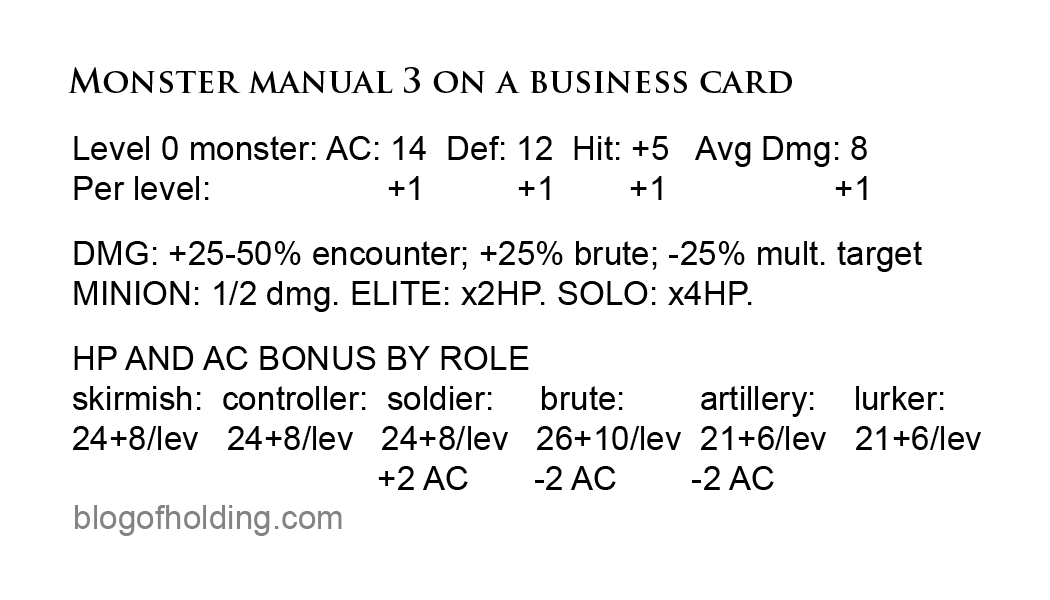
With the changes to monster stats in Monster Manual 3, it’s now so easy to create monsters that I can fit all the formulae I need for attacks, defenses, and hit points on a wallet-sized piece of paper, and I’d still have room on the back to sell adspace (targeting the coveted 18-34 “people who are photo ID” demographic). In fact, I’m thinking of replacing MM3 with a business card.

Note: Through April 10, you can get MM3 business cards as a backer bonus for my Random Dungeon Generator poster!

Business card front

(high-quality printable version)

Business card back

(high-quality printable version)

Also on a business card:
Character Sheet on a business card

I like to come up with my own monsters on the fly. Once I come up with the idea of a giant roc with four elephant heads, I don’t need a Monster Manual to tell me that it has a fly speed, can make four grab attacks, and that it drops armored PCs onto sharp rocks to get at the food inside.

What I like the Monster Manual for is that it provides me numbers. If I want to run my Crowliphaunt as a level 12 elite brute, I can open the monster manual, look up a level 12 elite brute (flesh golem, for instance), and use its attack bonus, defenses, hit points, and damage expressions, swapping in my own damage types, status effects, and bizarre special abilities.

Really, though, there’s a lot of excess poundage in the Monster Manual that I don’t use every session. A while ago, I started running monsters using a cheat sheet listing the average defenses, hit points, etc. of each monster role, along with the damage expressions from DMG page 42. This cut down the Monster Manual to about a page.
(more…)

Mazes and Monsters retro-clone 2: actual gameplay

Monday, July 26th, 2010
This entry is part 2 of 34 in the series Mazes and Monsters

(As I mentioned in part I, I’m reverse engineering the rules to the RPG from the Tom Hanks blockbuster Rona Jaffe’s Mazes and Monsters.)

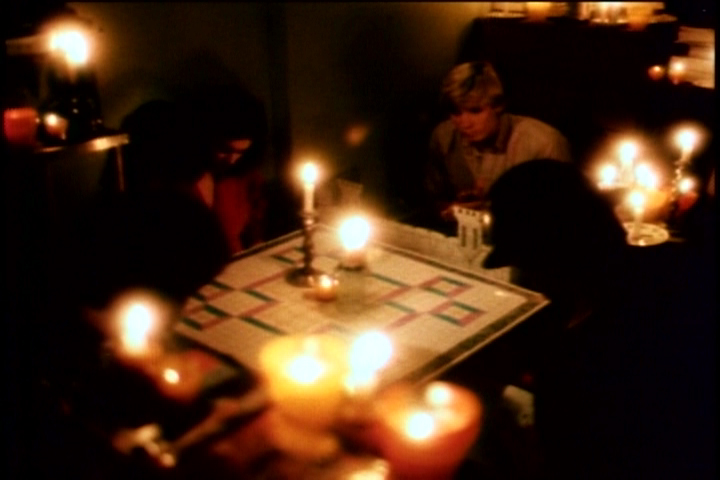
Here’s the first scene where we see a Mazes and Monsters game being played! And, as we’d expect in this film, which is so steeped in RPG rules that it is practically a Mazes and Monsters manual, we can get a lot of rules information from just the first frame of this scene.

Mazes and Monsters board

First of all, we can see that this game is played on a board. (I think? It could also be just an awesome coffee table that happens to have a dungeon-like pattern.) Second, we see that there are candles. Lots and lots of candles. Finally, we see what looks like a GM’s screen, shaped like a sweet castle!

Notable for their absence: dice. None of the players have any dice sitting in front of them. What kind of game is this? What do the players stack when they are bored? The only possible answer is NOTHING, because IN MAZES AND MONSTERS YOU DO NOT GET BORED!!!

If anyone had any lingering doubts about Mazes and Monsters being an entirely separate game from D&D, those doubts should be dispelled. Most editions of D&D have some sentence that is a variation on the following: All you need to play this game is a few friends, this book, dice — and imagination!

Imagine that sentence as it would appear in the Mazes and Monsters rulebook:

All you need to play this game is at least three friends, this book, NO dice, a board (or possibly a coffee table), and some personal problems you want to work out. Hundreds of candles are optional but highly recommended.

OK, let’s get to some dialogue!
(more…)

Every Book’s a Sourcebook: Mossflower

Friday, July 23rd, 2010

Mossflower is a young adult fantasy about some mice on an adventure. The two main characters are routinely described as “the warrior” and “the thief”, so you don’t have to look far to find the D&D roots here.

An interesting difference between mice and human heroes is that mice don’t have the sense of entitlement that comes with being on the top of the food chain. Humans expect to be able to kill any monster, even dragons; but there are a lot of predators that mice, even mice warriors, flee.

At one point, the rodent heroes fight a crab. They’re forced to flee because the crab’s shell makes it impervious to their attacks.

Obviously, Mouse Guard is the appropriate system to model such a battle, but as a D&D battle, it could still make a memorable encounter. A fight with a creature with an unreasonably high AC could potentially be more like a puzzle than a traditional battle. How can the PCs triumph if they can’t hit? The AC would have to be very high, though: if it were just, say, 5 points higher than average, the PCs probably wouldn’t change their strategy. They’d just bang against the creature for turn after turn, missing on a die roll of 15 or lower, and blame the DM for a boring encounter.
(more…)

Mazes and Monsters: retro clone

Monday, July 19th, 2010
This entry is part 1 of 34 in the series Mazes and Monsters

There have been a lot of open-source old-school game clones: OSRIC, Labyrinth Lord, etc, letting people legally produce content compatible with older games. One game that has been sadly neglected is Mazes and Monsters. Who among us doesn’t have fond childhood memories of spelunking in costume until our friend Tom Hanks went crazy?


Mazes and MonstersWell, not me, because I was never lucky enough to find a M&M group – I had to make do with Dungeons and Dragons. Rona Jaffe’s Mazes and Monsters sure made M&M look intriguing though. Evil creatures! Traps! Descent into madness! Hats!

It’s been suggested that there never was a M&M game – that the Mazes and Monsters movie is an excoriating criticism of a fictionalized version of D&D. If so, it is a dismal failure, because as we can see from the movie, MAZES AND MONSTERS IS NOTHING LIKE DUNGEONS AND DRAGONS. Therefore, unless we are to assume that Rona Jaffe and everyone involved in the movie are total idiots who didn’t bother to do the most trivial speck of research, we must assume that the movie is an excoriating criticism of a real game called Mazes and Monsters that I have just never heard of.

Rulebooks of Mazes and Monsters are hard to come by; luckily Rona Jaffe’s movie contains a wealth of gaming detail – enough, I think, to make a workable retro-clone. I volunteer to watch the movie and glean any rules details. The M&M community will have to help fill in any rules gaps with memories and speculation!

My first question for the community: Since the name “Mazes and Monsters” is undoubtedly under copyright, what should we call our retro clone? The suggestions that come to my mind are

  • Mazes and Hanksters
  • Mazes and MOSRIC
  • Rona Jaffe’s Dungeons and Dragons

Vote or leave suggestions in the comments!

Let’s start watching the movie!

Media Uproar

reporter

He sounds a little like Howard Cosell.

The movie begins with wailing police sirens and a be-trenchcoated reporter doing a story about a Mazes and Monsters-related disappearance. Even in his media fearmongering, though, we can find good material for our game:

REPORTER: Mazes and Monsters is a fantasy role-playing game in which players create imaginary characters. These characters are then plunged into a fantasy world of imagined terrors. The point of the game is to amass a fortune without being killed. It’s kind of a psychodrama, you might say, where these people deal with problems in their lives by acting them out.

This is good stuff! Let’s use it for page 1 of our game!
(more…)

gafiation

Friday, July 16th, 2010

Here’s a piece of vocabulary from Hartley Patterson’s 1977 article in White Dwarf:

Discussing a dead RPG group, he says “They actually got a couple of moves in before handing over to Geoff Corker, who suffered a sudden and total gafiation and killed the game stone dead.”

I’d never seen the word “gafiation” before. Looking it up, I found the term GAFIA:

Frodo gafiating from the Fellowship

Frodo gafiating from the Fellowship

GAFIA (along with derived form such as gafiate and gafiation) is a term used in science fiction fandom. It began as an acronym for “Getting Away From It All”, and initially referred to escaping from the mundane world via fanac. However, its meaning was soon reversed, and thereafter it referred to getting away from fandom and fannish doings. When fans say they’re gafiating, it means they intend to put some distance between themselves and fandom. This can be either a temporary or a long-term separation.

(more…)

RPG history: Midgard

Wednesday, July 14th, 2010

Issue 1 of the Strategic Review (1975) contains an interesting ad: “POSTAL DUNGEONS & DRAGONS VARIANT, a game which combines D&D and MIDGARD will be handled through the magazine, FANTASIA. To obtain full details, write: FANTASIA, Jim Lawson, …”

I just noticed this for the first time yesterday, and wondered, what was “MIDGARD,” which was compatible in some way with D&D? Was it a 70’s RPG I had somehow never heard about? or was it just a D&D campaign set in a Viking world?

Strategic Review 6, in its ‘zine review column, Triumphs and Tragedies, has this to say about the Fantasia magazine:

FANTASIA TODAY is a “magazine of postal fantasy gaming.” It seems to be based on a massive game, using revised “Midgard” rules. The price varies with the size, so get in touch with Jim Lawson, … Vol. I, No. 6, had an excellent article on herbs and magic, complete with sketches of each herb. The printing, though, which runs from fair to poor, relegates it to the status of MINOR TRIUMPH.

I’d never heard of a 70s Midgard RPG, but then again, I’m not exactly a grognard. I got into D&D in the late 80’s: anything before AD&D and the Red Box is ancient history to me. But, as you’d expect from someone who is drawn to pseudo-medieval fantasy, I like ancient history. Just as mountain peaks gain majesty with distance, so do nerds (even putting aside any majesty-reducing hygiene issues).
(more…)

Every Book’s a Sourcebook: Little Women

Monday, July 12th, 2010

Elsewhere, I’m reading Little Women – slowly – and blogging about it in excruciating detail. Little Women may seem like an unlikely source for D&D inspiration, but that’s because you’ve forgotten that Every Book’s a Sourcebook.

Here’s a passage that Little Women‘s author, Louisa May Alcott, liked so much that she put it, or something very close to it, in two books (Little Women and A Long Fatal Love Chase):

Valrosa well deserved its name, for in that climate of perpetual summer roses blossomed everywhere. They overhung the archway, thrust themselves between the bars of the great gate … Every shadowy nook, where seats invited one to stop and rest, was a mass of bloom, every cool grotto had its marble nymph smiling from a veil of flowers and every fountain reflected crimson, white, or pale pink roses, leaning down to smile at their own beauty. Roses covered the walls of the house, draped the cornices, climbed the pillars, and ran riot over the balustrade of the wide terrace, whence one looked down on the sunny Mediterranean, and the white-walled city on its shore.

Valrosa sounds like a beautiful city: overgrown with flowers, perhaps so overgrown that it is in fact abandoned. What if my campaign’s Undead City, instead of being a depressing gray ruin overrun with ghouls, is a beautiful, sweet-smelling garden city overrun with ghouls? White roses climb up the city’s walls and choke the alleyways. They blossom through the eyesockets of ghoul-devoured corpses in the street. A cool grotto with a flower-covered marble nymph sounds like a great place for the fleeing PCs to get beset by skeletons.