Archive for the ‘RPG Hub’ Category

The Jewel of Seven Stars

Friday, October 29th, 2010

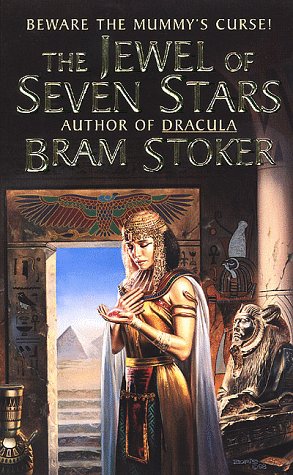
The Jewel of Seven Stars by Bram Stoker

Bram Stoker wrote a book about mummies? YES! (He also wrote books about dragons, witches, and radium-powered airplanes.)

The Jewel of Seven Stars is a locked-room mystery, which is a mystery genre which requires a little extra work in D&D. It’s not enough that all the doors and windows be locked from the inside. At the very least, the room must be warded against teleportation, entry via other planes, and insubstantial creatures passing through walls. Alarm should also be used, to ward against invisible assassins. Without any of these countermeasures, the question becomes not “how could this happen?” but “which well-known trick was used?”

Given these minimum requirements, the only interesting locked-room murder victim is a paranoid high-level spellcaster (or someone – possibly royalty – who can hire one).

The Jewel of Seven Stars is much less well known than Dracula, but it is still a magical fantasy, so the same rules apply. The victim is basically a paranoid high-level spellcaster (steeped in the arcane mysteries of Egyptian mummies). He’s set up his own defensive magic, but he’s been stabbed anyway – in a way that cannot be self-inflicted.

Off the top of my head, here are some fantasy locked-room mystery solutions:

  • The victim is the recipient of a voodoo-doll-style curse where they can be hurt remotely.
  • One of the trinkets in the room is a hostile Figurine of Wondrous Power.
  • Stabbed or bludgeoned by an animate piece of furniture.
  • The murderer was admitted by the unsuspecting victim. After the crime, the murderer re-locked the door and re-set the wards, shrunk to the size of a flea, and is STILL IN THE ROOM oh my god Sarah is in there now
  • The murderer is a snowman, who melted. (ALWAYS be suspicious of an unexplained puddle of water. ICE IS ALWAYS INVOLVED)
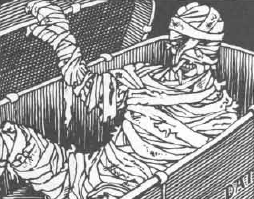
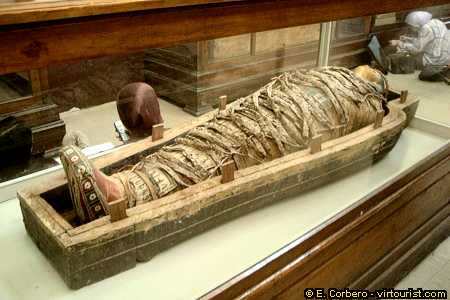
1e mummies

Thursday, October 28th, 2010

Monster Manual mummy

I’m looking at the AD&D Monster Manual entry for mummies, and there’s a lot of weirdness here.

No. Appearing: 2-8 I guess sometimes you find a mummy king and queen along with a few attendants, but I sort of imagine a typical encounter being against a single scary mummy. I guess that’s just in the movies.

Mummies are undead humans with existence on both the normal and the
positive material planes.
I remember the negative material plane as being more undead-y. The 1e PHB says that the Negative Plane is “the place of anti-matter and negative force, the source of power for undead, the energy area from which evil grows.” The positive plane, on the other hand, “is a place of energy and light, the place which is the source of much that is vital and active, the power supply for good.” And it is crawling with mummies for some reason.

The mere sight of a mummy within 6″ will cause such fear and revulsion in
any creature, that unless a saving versus magic is successful, the victim
will be paralyzed with fright for 1-4 melee rounds. Note that numbers will
give courage, and for each creature above 6 to 1 mummy, the creatures
add +1 to their saving throw. If humans confront a mummy, each will
save at +2 on his dice.
Classic 1e subsystem, including a saving throw bonus for outnumbering the mummies. I’m guessing that this is isn’t a general rule about fear, just about mummy-induced fear? And humans get a +2 bonus, because why?

The other fun thing about the fear save bonus for outnumbering a mummy is that it will never come up. Mummies appear in groups of 2 to 8. The average number of mummies is 5. In order to get a +1 bonus on saving throws, there must be 31 party members. I know that in 1e, you had a lot of henchmen, but still, that seems like a big group. Even if you only run into 2 mummies, you need 13 PCs to get a saving throw bonus.

Mummies can be harmed only by magical weapons, and even those do only one-half normal damage, dropping all fractions (5 becomes 2, 3 becomes 1, and 1 becomes 0 hit points of damage). What level are PCs fighting mummies? According to the Wandering Monster chart, you start encountering mummies on the fifth dungeon level, but you seem to encounter them most around the 9th or 10th level. I pity the poor sad sack who’s doing 1 damage at that level. I mean, nonmagic weapons don’t even work, so the fighter has at least a +1 sword. And most magic-user spells will do multiple dice of damage at that level, right?

Oh – the Wandering Monster table also indicates that you encounter 1-2 mummies as wandering monsters. So I guess you can outnumber mummies 6 to 1, just not in their lair.

A raise dead spell will turn the creature into a normal human (of 7th level fighting ability, naturally) unless the mummy saves versus magic. Naturally? Why naturally? Naturally 7th level, because mummies have 6+3 Hit Dice? or naturally fighting ability, not, say, clerical ability, because mummies are good at punching? Also, I’m curious what the 7th level fighter thinks of being raised from the dead. Is he like “Thank you for releasing me from that vile curse, now help me get these bandages off!” or is he like “You robbed me of eternal life, I shall punch you!”

And don’t get me started on the ethereal mummy, which always strikes by surprise.

the mummy’s curse in fiction

Wednesday, October 27th, 2010

Monster Manuals have never dealt with the classic “mummy’s curse”. Monster Manual mummies give you “mummy rot”, a disease which has slightly different effects across the editions, but it’s always just a workplace hazard for mummy killers. When you come out of the temple, you head to the cleric to get your disease removed, and that’s the end of it.

The mummy’s curse superstition seems to have something to do with a lingering doom that hangs over the heads of those who disturb mummies,and is something like, “100 years after the tomb was opened, NOT ONE of the excavators remained alive!” Inasmuch as it makes any sense at all, it’s about death under mysterious circumstances, some time after the adventure, of seemingly healthy people. DON’T VIOLATE MUMMY TOMBS, or you’ll get approximately the same kind of bad luck you get by breaking a chain letter, or not being on that one flight.

Could we actually come up with game rules for the mummy’s curse? The 4e Unearthed Arcana “Curses!” article might be a place to start. What I’d like to see, though, is official rules text like

Any PC who disturbs the sarcophagus is subject to THE MUMMY’S CURSE. THE MUMMY’S CURSE cannot be removed by Remove Curse, Remove Disease or any other means short of Limited Wish or Wish. THE MUMMY’S CURSE has no immediate effects. However, the PC should note it on his or her character sheet.

The actual effects of the Mummy’s Curse should be SO HORRIBLE that, lest PCs discover countermeasures, they are NEVER PUBLISHED IN ANY BOOK. Heck, maybe the effects of the curse are determined retroactively. Like, when the PCs are finally eaten by gnolls, the DM leans over and taps the character sheet. “MUMMY’S CURSE,” he says.

Essentials Elder Dragon

Wednesday, October 27th, 2010

A Preview of the essentials elder dragon is up on the D&D Website.

There’s some pretty good stuff here. My thoughts are below:

  1. Action Recovery: An answer to the crippling save ends dazing, stunning, and dominating effects some higher level players can throw at dragons. This guarantees they only last a round, which is A LOT better than the chance these already super powerful effects might stick around for multiple rounds of combat.
  2. Instinctive Assault: This trait is awesome and really allows this solo to pack an extra punch. It gives a free action claw or bite, which is pretty boss, and because the dragon makes it at 10+ their normal initiative they are both likely to go first and mix up the combat a bit so it’s not just the dragon followed by all the PCs. It also ends stunning or dazing effects, meaning that a dragon only really loses half of its total attacks to one of these effects.
  3. Bite: A grab + ongoing damage that only goes away when the grab ends (DC 30) is awesome and SUPER powerful against those poor low strength builds, which is a lot of people, even some defenders (I’m looking at you Charisma based Paladins).
  4. Claw: Two attacks is great, especially when you consider this often adds up to 4 attacks! Also, this grabs, meaning you can pin down two PCs (3 if you use claws and follow up with a bite).
  5. Immolate Foe: I’m of the opinion that most monsters should have ranged attacks even if they are behind their normal attacks in terms of pure power. Solos especially need this sort of thing, since it is way too common to be immobilized or otherwise pinned down with no recourse but a ranged attack. This ranged attack is definitely behind claw or bite in terms of damage output but is good enough that the combat can still be fun for the DM if there’s a round or two of the dragon being totally pinned down.
  6. Breath Weapon: Nothing special about this, but it bears mentioning that a close blast is an awesome way to make players think more tactically about combat rather than bunching up to be slaughtered.
  7. Tail Strike: Another solid attack to discourage moving around, though of course marking the dragon always puts the DM in a tight spot when another PC starts moving around to flank.

Action recovery and instinctive assault are so good that I can kind of see just giving them to every solo. Obviously instinctive assault is going to buff up any solos combat ability by a ton, but I could see swapping out other powers as appropriate as it made sense to do so. And action recovery is kind of necessary for balance with solos, since daze, stun, and dominate are 5X more crippling against a solo versus a normal monster!

the curse of the mummy’s curse

Tuesday, October 26th, 2010

In honor of Halloween, it’s mummy week at blogofholding! All mummies, all week!

Mummies have had a rough ride. They’re the afterthought of the undead, in D&D as in pop culture.

It’s easy to drop a vampire in to an adventure because they’re generic; sure, Count Dracula is Transylvanian, but it’s easy to imagine a vampire from elsewhere. Mummies, on the other hand, are tied to a specific Earthly time and place. Just as you can’t have the party fight Franklin Delano Roosevelt without explaining how he got from 1930s USA, it’s hard to drop a mummy into an adventure without dropping in Egypt too. If you include a mummy, do you include heiroglyphics? Pyramids? A stripy King Tut beard?

There are 3 ways you can go with mummies:

Crazy Funhouse Dungeon Land. You roll on Wandering Monster table VII and get a mummy. You look up the mummy description: you see that the “No. Appearing” column says 2-8, so you roll the dice and the party fights 6 mummies. That’s just how it goes in Crazy Funhouse Dungeon.

Egypt Land. You put an Egypt-flavored ancient civilization in your campaign world. In a RPG that revolves around robbing tombs, that’s not terribly hard to work in. You probably throw the mummy into a trapped tomb into a desert; you might include a sphinx as well. Pyramids are optional, but maybe a little too much?

The problem with this approach (if it is a problem) is that this adventure will feel very Egyptian, and not very, say, Greyhawk.

Mummy in a Strange Land. You reflavor the mummy with a bizarre new origin, sufficiently different that it doesn’t read as an Egypt analogue. For instance, mummies are the keepers of a vast extradimensional library. When a librarian dies, he is swathed in book pages related to his area of expertise. He is then brought to unlife as a mummy so that he can continue his librarian duties, but as a mummy, he knows only what is written on the pages of his wrappings. Mummies are often encountered in dungeons searching for ancient books to add to their mummy wrappings. (Am I vaguely remembering this from something I read, or did I make this up?)

Reflavoring the mummy is an uphill struggle, because the Egypt mummy story is so well-established that it will take a pretty strong flavor to overpower it.

Mazes and Monsters: Halloween Episode

Monday, October 25th, 2010
This entry is part 11 of 34 in the series Mazes and Monsters

Jay Jay is throwing a Halloween party! Jay Jay is dressed as Noel Coward. Blondie is a naval officer. Kate is, uh, the naval officer’s girlfriend? (I forgot to mention, Blondie and Kate hooked up at the end of the last scene.)

The party also contains Frankensteins, maids, Darth Vaders, and pirates. (No mummies. Too bad. A mummy is, like, the easiest Halloween costume. All you need is gauze, or, in a pinch, toilet paper.) Everyone is bopping to generic 80s party music, except Tom Hanks, who is stalking through the party with the spooky asceticism of one who has been visited by the Great Hall. Hanks is dressed like a Holy Man. But it’s NOT A COSTUME.

You! Shall! Not! Pass!

Hanks leaves the party and closes the door. He lays his hand on the door in a mystic gesture.

This peculiar gesture is undoubtedly some Holy Man spell, meant to prevent his friends from following him.

Spells

Lock Portal: By laying his hand on a door, a Holy Man can lock it for a few hours. Anyone who tries to force the door or open it with a key must succeed on a RONA based on the Holy Man’s level.

At this point in my notes from the first time I watched the movie, I have the following puzzling scrawl:
(more…)

Circumnavigate the D&D globe!

Friday, October 22nd, 2010

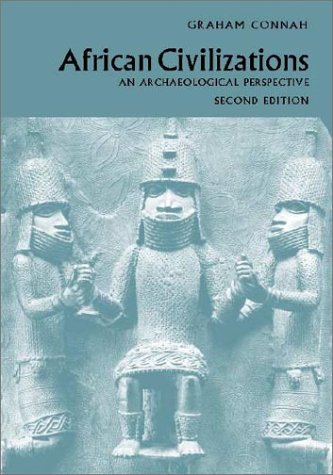
In a comparison of the east and west coasts of Africa, the book mentioned that prevailing winds are southern on the west African coast. Until improved ship designs in the 15th century, ships could sail down the coast of Africa, but they could not sail back!

African Civilizations by Graham Connah

African Civilizations by Graham Connah

It must have sucked figuring that out. If you went south too far in a medieval ship, you’d probably never get home. You might try to land and walk back home, but good luck crossing the Sahara Desert.

D&D ships are probably of medieval design, and it is quite possible that, as in the real world, there may be one-way journeys for D&D ships. Here’s a natural way to impose the same kind of walls and one-way doors on the campaign map that exist in the dungeon.

Imagine the easternmost continent of a campaign world has a prevailing easterly wind along its deadly southern coast. Once you go too far, it’s impossible to sail back to the known world. Let’s say that there’s a tempting ruin right on the edge of the point of no return. Getting there requires a ship-based skill challenge. Success means that the PCs get to the ruin. Failure means that the PCs’ ship is caught in the current/prevailing wind and has no way of getting home except by circumnavigating the globe, which will take a year or more. Here is a skill challenge with major consequences for failure! Failing the challenge would change the nature of the campaign, potentially for many game sessions, into a ship-based Odyssey campaign. Failure in this case might be much more interesting than success.
(more…)

wading by torchlight

Wednesday, October 20th, 2010

Here’s a fun dungeon room:

The room is a pool: everyone is kneedeep in water. On the other side of the pool are hooded enemies who, among their other attacks, shoot a ray that they use to dispel or suppress magic light (Light spell, sunrods, etc). The PCs must use torches or lanterns in order to see. It’s dark and shadowy and the light of the torches shines off the swirling water, making the room’s floor invisible.

The front-line enemies have an attack that disarms PCs. If you are disarmed, you have to waste time feeling around the bottom of the pool for your weapon. If the enemies disarm you of your torch or lantern, the room is potentially pitch-black.

In the middle of the room is a pit (invisible by torchlight because of the light conditions). The enemies avoid it, staying at the edges of the room. If someone falls in, they are swimming while everyone else stands, and must use move actions to climb out. Their light sources are extinguished.

Are there things in the dark water? Teeth that clamp onto swimming PCs? Maybe.

When I ran this encounter, I put away the minis. I described the blackness, the torchlight, the hiss and smell of water, and the echoes of combat in the room. No one wanted to be fighting in that room in the dark. And no one stayed in the water long enough to find out if they were alone.

blind decisions

Tuesday, October 19th, 2010

I remember once, DMing a dungeon crawl, saying something like “The path forks. Will you go left or right?” The players looked at me blankly for a few seconds before someone said, “Uhhh, we’ll go right.” I realized I had just presented the players with an uninteresting decision. The players had zero information, so they chose randomly.

I don’t remember what was to the left or right in that situation, but let’s say, for the sake of argument, that I had said, instead, “The path forks. The left fork leads to a dead end, and the right fork leads to an encounter with a troll.” This would also have been an uninteresting decision. No party would ever choose the dead end.
(more…)

when to count ammo

Monday, October 18th, 2010

Gamma World’s cool expendable ammo mechanic solves a lot of problems with expendable magic items. It doesn’t handle normal D&D ammunition (arrows, etc) very well though.

For the most part, I, and nearly every sane DM, handwave ammunition. Once PCs have looted hundreds and thousands of GP, no one wants to track the number of silver pieces expended on arrows.

There are a few times, though, where you might want to make the PCs count arrows.

Siege

In a siege, there is no way to replenish basic supplies. When everyone’s running low on arrows, you need to make interesting choices about when to take a shot and when to wait for a better opportunity. Also, you can make dramatic encounters out of raids made to replenish the ammunition stock:

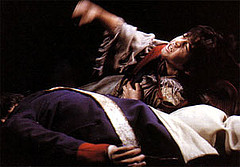
gavroche getting shot

poverty

Especially at level 1, PCs may find themselves so strapped for cash that they have to struggle to afford basics like food and lodging. This works especially well in a “gritty” or “picaresque” game, where lack of money may force the PCs to take some dirty jobs. PCs may have to consider whether their target is worth the price of their arrows.

Remember the obvious point that arrow scarcity only hurts archers: you may or may not feel that it’s fair to impose a burden that only affects one or two PCs.

feeling lucky