Archive for the ‘RPG Hub’ Category

City altars

Friday, October 15th, 2010

Another interesting things from the cities of the West African forest: archaeological evidence from one city shows that there were altars built right at the side of their paved roads. That made me think of this:

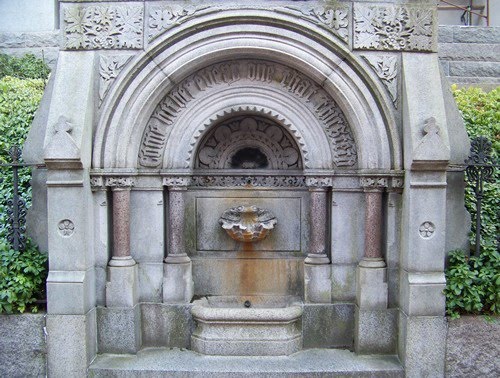
Lovecraft's fountain

Lovecraft's fountain

This is a fountain in Providence, RI, H. P. Lovecraft’s home town and where I lived as a teenager. Local legend has it that if you drink from this fountain, you will return to Providence – and that Lovecraft drank of it before he went to New York, which is why he is buried in Providence.
(more…)

a real photo of ents

Wednesday, October 13th, 2010

ents attacking a monastery

DUDE, LOOK AT THOSE ENTS ATTACKING THAT MONASTERY

THEY ARE JUST RIPPING IT TO SHREDS

THIS ONE IS CLIMBING UP ON THAT ONE’S BACK SO IT CAN SMASH THE HELL OUT OF THE ROOF

LOOK AT THE WAY THEIR GNARLY FINGERS TEAR UP THAT FLIMSY STONE! I WONDER WHAT THEY ARE SO MAD ABOUT

DUDE I THINK WE SHOULD GET OUT OF HERE THERE ARE MORE TREES COMING

I found this picture in a photo gallery from Prah Khan, Cambodia at travelblog.org. The pictures are all amazing. You should use them all as visual aids in your D&D game. Every one could be the centerpiece of an encounter.

ammo rules from Gamma World

Tuesday, October 12th, 2010

I never played Gamma World. I’m just not a post-apocalyptic guy, I guess. Some people’s inner psyche resonates to a brutal, hopeless desert world filled with mad Maxes. My “quiet place” is a verdant forest, dotted with wildflowers and limpid pools, and it’s being set on fire by orcs.

Although I’m not the Gamma World demographic, I do want to read the Gamma World rulebook. I like reading RPG combat mechanics. I have this 19th-century idea that RPG game rules are steadily progressing towards perfection. (That’s opposed to the classical worldview of old-school bloggers: that every RPG generation is a further-debased descendant of a Golden Age.)

WOTC preview articles have shown ff some of the Gamma World rules. One of my favorite of these mechanics is the rule for ammo use.

Ammunition is a problem in D&D. Do you make all the players count arrows? (Probably not.) Do you let people buy a sheaf of 20 arrows, and let them use that from level 1 to retirement? (Probably.) What about magic arrows? should PCs count them?

The Gamma World rule is this: when you use ammo, you may either try to conserve it or be profligate with it. If you conserve it, you can use it once per encounter. If you’re profligate with it, you can use it as many times as you like during this encounter, but at the end of the encounter, you’ve used it up.

This strikes me as a great way to introduce ammunition-conservation decisions without adding an irritating arrow-counting step to every ranged combatant’s turn. It wouldn’t work with normal arrows, of course: you can’t have a ranger who fires one arrow per encounter. I’d prefer to handwave normal ammunition and use this rule for what it was designed for: limited, powerful resources: a sheaf of magic arrows, perhaps. It could also replace the pre-4e rules for magic items with charges.

There’s an extra benefit of this rule, besides avoiding accounting. In video games as well as D&D, do you know how many times I use magic ammunition/items with charges? ZERO. I hoard. I like a rule that circumvents my hoarding instinct.

Mazes and Monsters: mystery in the caves

Monday, October 11th, 2010
This entry is part 10 of 34 in the series Mazes and Monsters

Remember the caves? They were featured, ominously, in the first shot of the film, and then Jay Jay was going to commit suicide there, but didn’t, and then the players LARPED there without incident. It seems that something is finally happening there!

Katie drives by the cave and sees a car parked nearby. Panicked, she rushes in to save … Blondie? He confesses that he has been mapping the caves between official game sessions. “”I wanted to figure out where Jay Jay hid the treasure.”

Katie and Blondie get home safe. Another fake-out where no one gets lost in caves. Something is going to happen there soon, though, I can just feel it!

What we learn from Blondie’s confession about “the treasure”, though, is that there is just one treasure at the heart of every maze! It sounds like when you find the treasure, you win the maze. Players have a lot of motivation to find the best possible route to the treasure, avoiding unnecessary dangers and obstacles.

This is how early editions of D&D worked too. Most of players’ XP was earned from treasure; wandering monsters were things to be avoided. By third edition D&D, though, character advancement came primarily from combat. If you skipped the combats, you’d never level up.

We’d better codify this in our Mazes and Monsters rules.

The maze treasure

At the center of every Maze in Mazes and Monsters is a treasure! The object of Mazes and Monsters is to find this treasure. Only by finding the treasure will the characters gain the wealth, powers, and spells they need to gain Levels and defeat their personal problems. Be wary, though: every treasure will be guarded by formidable obstacles!

I think that, while the bulk of XP in Mazes and Monsters comes from finding the Treasure, you must also get some XP from incidental encounters. After all, everyone was excited when the party met a dozen bloodthirsty undead!

How long to level 9?

I have another question about gaining levels. All the players are so proud of having level 9 characters. How hard is this? How long does it take to get to Level 9?
(more…)

sometimes you gotta sacrifice a human

Friday, October 8th, 2010

What struck me about the cities of the West African forest is the archaeological evidence of their religious sacrifices. First, there were sacrifices of wild, not domesticated, animals (animal type unspecified). I’m more familiar with European sacrificial traditions where domesticated animals like oxen are sacrificed.

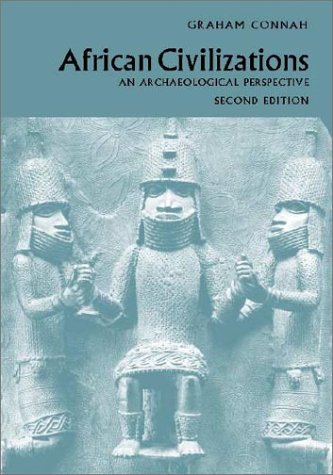
African Civilizations by Graham Connah

African Civilizations by Graham Connah

What kind of wild animals might be sacrificed in a D&D forest culture? Deer? What would it mean about a religion if they were to sacrifice a stag? Somehow it makes me think of a religion that reveres the stag, but sacrifices it as part of a spring/fertility ritual. That might tie in with Robert Graves-type sacrificial-king human sacrifice.

Human Sacrifice

Human sacrifice was practiced in some West African forest civilizations:
(more…)

Is Rapier the new Longsword?

Thursday, October 7th, 2010

Facts:

  • With the Essentials Rules Update the rapier is now a military melee weapon.
  • In 4e, the rapier is and always has been a light blade one handed melee weapon that has a +3 proficiency bonus and does 1d8 weapon damage.
  • In 4e, the longsword is and always has been a heavy blade one handed melee weapon that  has a +3 proficiency bonus, does 1d8 weapon damage, and has the versatile property (+1 damage when wielded in one hand).
  • Nimble blade is a heroic tier feat that requires 15 Dex and gives a +1 bonus to hit with CA and while wielding a light blade.
  • Light Blade Expertise (a new essentials feat) gives a +1 feat bonus to hit per tier and a +1 bonus to damage per tier when you have Combat Advantage.
  • Heavy Blade Expertise (also an essentials feat) gives a +1 feat bonus to hit per tier and a +2 bonus to AC vs OAs.

Conclusion: The rapier is the default weapon of choice for one handed weapons!

  • Light Blade Expertise is better than Heavy Blade Expertise! A damage bonus that scales with level is awesome and worth a feat in its own right (Weapon Focus, which it stacks with). In contrast, a +2 to AC vs OAs, while it technically mimics a feat, is far less impressive overall and has less utility to most builds, since people try to avoid Opportunity Attacks as much as possible, in my experience.
  • For those with 15+ Dex, nimble blade is a great feat to take and can be taken with a rapier with little to no drawbacks.
  • The Versatile property of the longsword is basically meaningless; how often is someone going to unstrap their shield (a standard action) and give up a +1 or +2 AC so they can swing a sword around 2 handed for a +1 bonus to damage? Not very often, I suspect!

Positive Consequences:

  • Halflings, gnomes, and other small races don’t get punished for being small since they can easily heft a rapier, which has similar stats to a longsword.

Negative Consequences:

  • Heavy Armor: It’s annoying to imagine a bunch of fighters and other classes in heavy armor with heavy shields wielding rapiers, which historically were used primarily in civilian duels with no armor.
  • Long Swords are Iconic: It just feels right for longswords to be the default weapon of choice! They’re kind of a fantasy staple in most stories and books about knights and other heroes, so it feels weird that a lot of PCs are going to be sporting rapiers now!
  • Two Handed Weapons: The bonus to damage makes for this weird situation where rapiers generally do equal or more damage (independent of class bonuses and the like) than big two handed weapons, which is just kind of a weird situation. It seems like if I’m giving up a shield to swing around a big two handed weapon I should be getting at least a small increase in damage. In the end, the advantage either way is only 1 or 2 points, but on principle I’d like to imagine that a bonus to damage is something I’m getting through weapon choice alone.

Is it a big deal that for a lot of classes (sword and shield fighters, duel wielding rangers, warlords, etc.) are switching to rapier rather than longsword? Ultimately, it’s not the end of the world, and it does have some benefits for small PCs. But it does make me a little sad, and is a continual reminder to me that improvements to some aspect of a game system often has unintended consequences.

I believe the new expertise feats were put in to make taking an expertise feat (a must-take feat) more interesting and meaningful, since now they’re tied to specific weapon choices. And of course, the expertise feats were created to begin with to address a math problem with scaling monster defenses, and had the unintended consequence of putting into the game a must-take feat that wasn’t very interesting (along with some other problems I’ve addressed in my House Rules article). Now as a result of making those feats more interesting, the balance has been tipped in favor of the rapier as the default one handed weapon!

by Thor, that’s a lotta ewers

Wednesday, October 6th, 2010

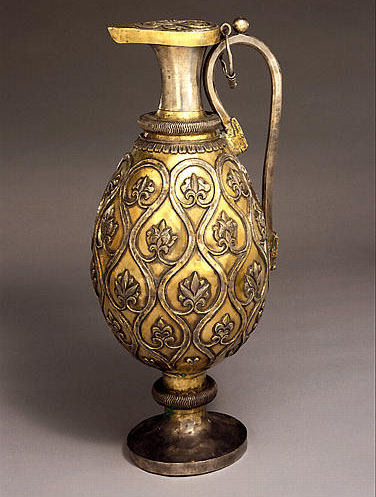
Ewer: A pitcher, esp. a decorative one with a base, an oval body, and a flaring spout.

I’ve mentioned the unnatural overabundance of ewers in D&D treasure, but I didn’t support my thesis with excessive evidence. That’s not like me, and it changes today. Here are the ewers-in-treasure sightings in core D&D rulebooks:

BECMI D&D

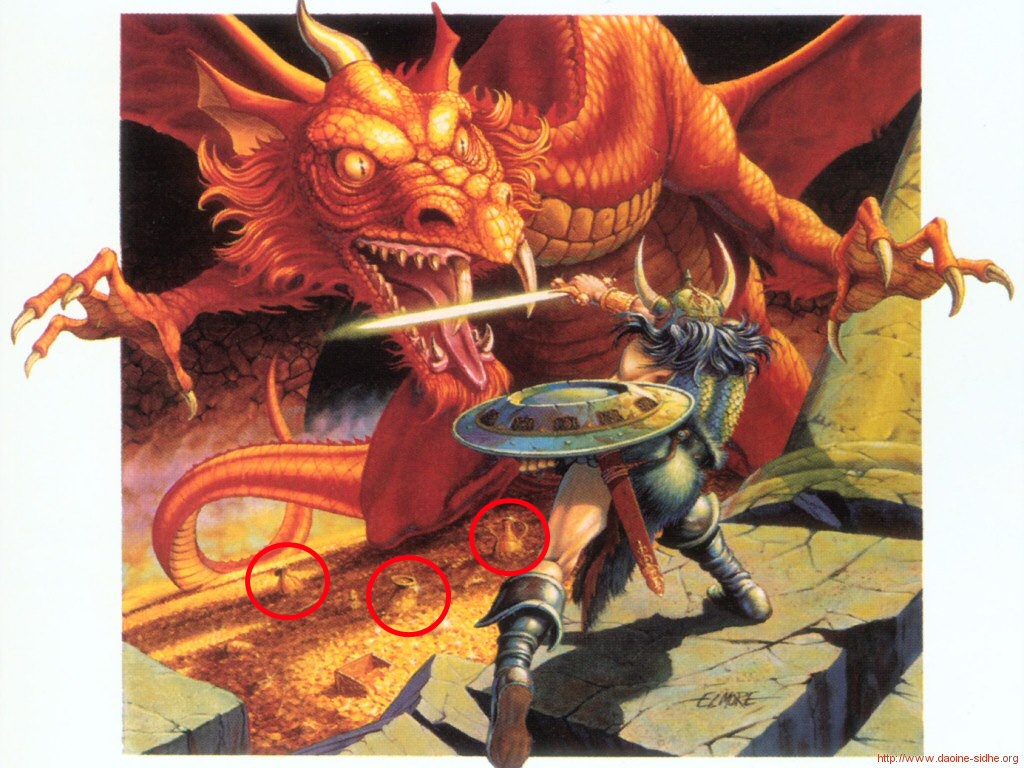
I’ve already mentioned the cover of the 80s Red Box, but let’s show it again:

You know this Viking is just going to keep the ewers and throw the rest of this treasure away.

But that’s not even the only ewer in the Red Box. Here’s a treasure illustration:
(more…)

antics

Tuesday, October 5th, 2010

Read Jeff Rients’ hilarious description of one of his best D&D sessions ever. You’ll notice it involves the PCs DECIDING, FOR NO GOOD REASON, THAT THEY NEED TO BE IN A PARADE.

Let me tell you about two of my best D&D sessions ever.

THE RATLING PLAY

I occasionally run a one-shot “ratling game”, where everyone plays anthropomorphic rats. By unspoken consent, everyone always makes wisdom their dump stat (or plays like it). It always devolves into lunacy.

On one occasion, the ratlings discovered that their home city did not pay proper reverence to Smidanoonan, the Rat God. Smidanoonan’s statue was (pointedly, they felt) absent from the row of statues on Godsbridge.

The ratlings decided they needed to construct a Rat God statue and stick it to the bridge with a dot of Sovereign Glue. For some reason they decided that they needed to do this WHILE PUTTING ON A PLAY. I think the play was part of a previous plan that was abandoned, but by then they’d already printed up the posters.

The session culminated with the performance of the play. The capstone of the entertainment was the raising of the statue to the bridge: the statue was too heavy for the ratlings to lift, so they decided they’d tie one end of a rope to the statue, the other end to a horse, and then get the horse to jump off the bridge.

I, the DM, was privately sure they would not be able to get the horse to jump off the bridge. I didn’t have enough faith in my players. At the critical moment of the play, one of the ratlings used a fear-based attack to spook the horse; another, a Beguiler, created an illusion of a green field off the side of the bridge. The horse jumped over the bridge’s rail and fell into the river, raising the statue of Smidanoonan to amaze and horrify the assembled human audience.

Not only did this game session involve no combat encounters, it involved almost no DM work at all. The magic was all due to the players taking the bit between their teeth and doing whatever the hell they wanted to do: I just handled some light adjudication.

THE GOD MACHINE

I was involved in another D&D play, this time as a PC. A troop of hobgoblins had captured the children of the village. When we tracked the hobgoblins to their lair, we discovered that the children actually liked the hobgoblins better than the villagers and didn’t want to go back! We DECIDED, FOR NO GOOD REASON, TO PUT ON A PLAY to win back the children.

I believe the hobgoblins put on a rival play, but I don’t remember it. I do remember that, as the wizard, I provided special effects and lighting. The rogue and paladin performed some impressive stagefighting: the play was a morality play about the battle between good and evil, and the outcome was decided by an actual combat between the players. (I think evil won.) Meanwhile, the dwarf, again FOR NO GOOD REASON, had built a device meant to shoot fireballs. (Maybe it was a stage set for Hell?) A few natural 1s on skill checks caused the device to backfire and incinerate the dwarf and several nearby PCs. I think that actually helped us win the play contest.

All these sessions – Jeff’s parade floats, and the two games I described – involve what can only be categorized as “antics”. Here’s what they all have in common:

  • The players chose the goal.
  • It was a bad goal (something not worth doing in the first place).
  • Neither the DM nor the players had any plan beforehand: everything was improvised.
  • Every game involved public performance by the PCs.
  • Every game involved construction by the PCs.
  • Every game ended in chaos and mayhem.

The above list is not necessarily a formula for how you should run every D&D session*, but it might be a reminder, for both DMs and players, that the DM doesn’t always need to lead. When the PCs decide they want to go off-course, they can lead the way to a Best Session Ever.

The horse passed his Swim check, by the way.

* Unless it is!

Mazes and Monsters: leveling rules

Monday, October 4th, 2010
This entry is part 9 of 34 in the series Mazes and Monsters

I’ve been blogging the Mazes and Monsters RPG for about two months now, which is a long time in internet land, so, just in case you’re new to the project:

I’m watching Tom Hanks’ Mazes and Monsters to glean the rules of the Mazes and Monsters RPG. So far, the game players (Hanks, Jay Jay, Kate, and the blond guy) have stolen costumes from the college theater department and LARPed in a dangerous cave, and Tom Hanks has gone totally insane, hallucinated a fight with an evil monster, and broken up with Kate because a spectral figure called “The Great Hall” told him to.

Now we’re all caught up!

Confused and hurt by her breakup with Hanks, Kate meets Blondie in a diner (apparently there is a diner on campus? it seems to be called “Fat City”) for some post-breakup flirtation, and to ask whether Hanks might be acting a little more… Pardieuxy than usual. Blondie is unable or unwilling to recognize the change in Hanks’ personality.

GIRL: What about his blessing people all the time and giving his stuff away and acting so holy?
BLONDIE: He’s just staying in character. […] I don’t think Robbie’s turning into Pardieux. We work out our problems in the caverns and then we leave them there.

It’s been a while since we were reminded that Mazes and Monsters is a game meant to help us Work Out Our Problems. But it is. Who knows how many thousands it helped during the 80s? Such a powerful healing tool was undoubtedly invaluable for professional psychologists. I bet this scenario played out a lot:

PSYCHOLOGIST: Hmm, your marriage does seem to be troubled. Perhaps we should try some role-play. (lights candles) You are standing before the greatest adventure of all: marriage. Shall ye enter?
HUSBAND and WIFE: Aye! (dice are rolled)
WIFE: I slew a Gorville!
ALL: Marriage saved!

But for every problem solved, there is a life ruined. For every yin, there is a Hanks. The game really should come with a warning to that effect.

Mazes and Monsters is a game about FUN – but it is also a game about self-improvement. Mazes and Monsters players work out their problems in the game and then they leave them there.

Like any respectable psychological tool – hypnotism, LSD, lobotomy, Scientology – Mazes and Monsters is dangerous if used improperly. Don’t try to work out serious real-life problems until you are high enough level to deal with them! And never play the game except under the guidance of a fully licensed Maze Controller!

The other fact to notice about this scene: Blondie writes off some pretty wacky behavior – blessing people all the time, giving away his stuff – as “staying in character.” Well, we know that Blondie isn’t so smart. This is the guy that advocated splitting up when they were LARPING in the cave. But still, “staying in character” seems to be something that is acceptable within the Mazes and Monsters subculture.

A high-level Mazes and Monsters player may want to start acting like his character in the real world. This is perfectly normal. This is what Russian theater director Konstantin Stanislavski calls “staying in character”. It can help players gain the naturalistic playing style they really need to work out their problems in the game.

The next night, Tom Hanks again dreams of The Great Hall!

HALL: Pardieux. Next you must find the secret city under the earth.
HANKS: When?
HALL: When you have purified your mind as you have your body.
HANKS: I’m making a map!
HALL: When you are ready, you will need no map.

From Hanks’ madness we can glean game rules. He is a player, not the Maze Controller, and yet he feels it is his responsibility to make a map. Therefore, a player must be appointed to be the party mapper, as in Dungeons and Dragons.

Player Responsibilities

The players should be prepared to do a little work to ease the task of the Maze Controller.

One player should be the maze mapper. This player notes down the twists, turns, corridors, and rooms of the Maze. Only by studying the map will the players be able to reach the treasure.

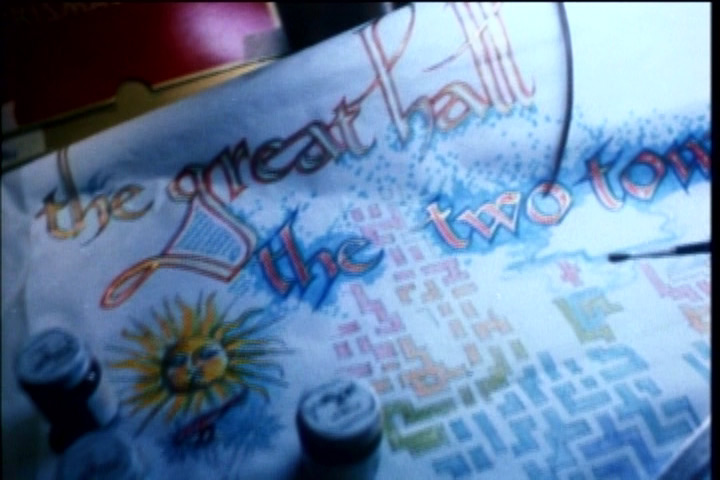
Here’s Hanks’ map. Pretty nice, huh?

the great hall/two towers map

Next session, we’ll talk about XP!

where do cities go?

Friday, October 1st, 2010

African Civilizations by Graham Connah

African Civilizations by Graham Connah


it is interesting to note that many of the savanna urban centres appear to have grown up at environmental interfaces, between transportation systems. Thus at Timbuktu goods were transferred from camel to canoe and at Kano from camel to donkey. (page 141)

When you’re drawing your map of the world, put cities at the border between two terrain types. That’s where traders change from one type of transportation to another. For instance, horses come in the north gate of the city, and camels go out the south gate.

It’s well known that cities grow up along coasts and rivers. That’s where ship- and raft-based travel meets road travel. But that’s just the most obvious example of this general rule.