I’ve been working hard in the random dungeon mines, mining random dungeons! I’ve got a few bits and pieces to show you.
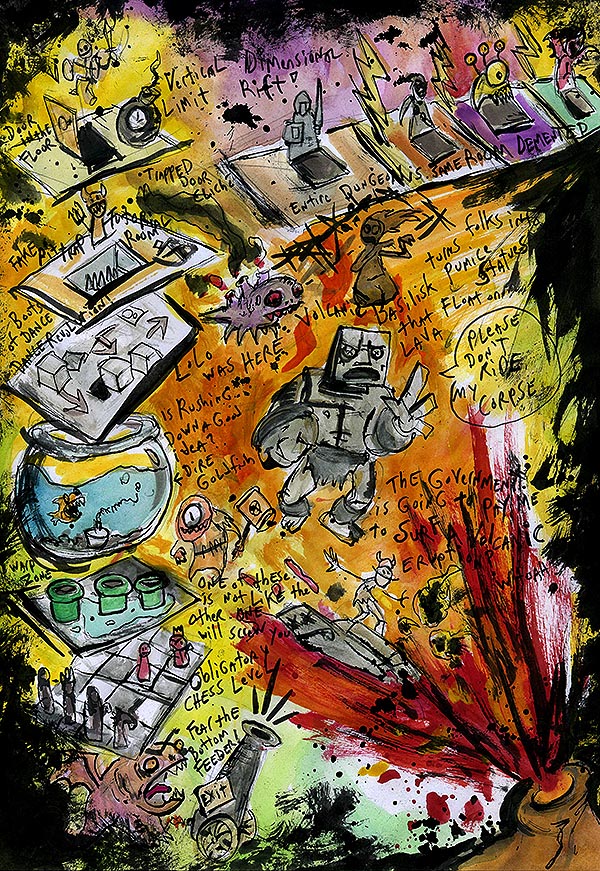
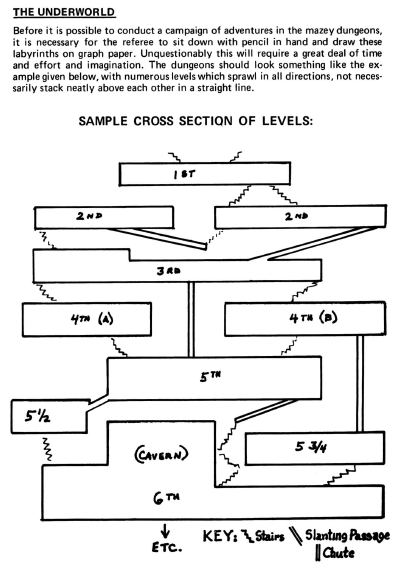
First, here’s a small version of the Random Dungeon poster file I sent to the printers:
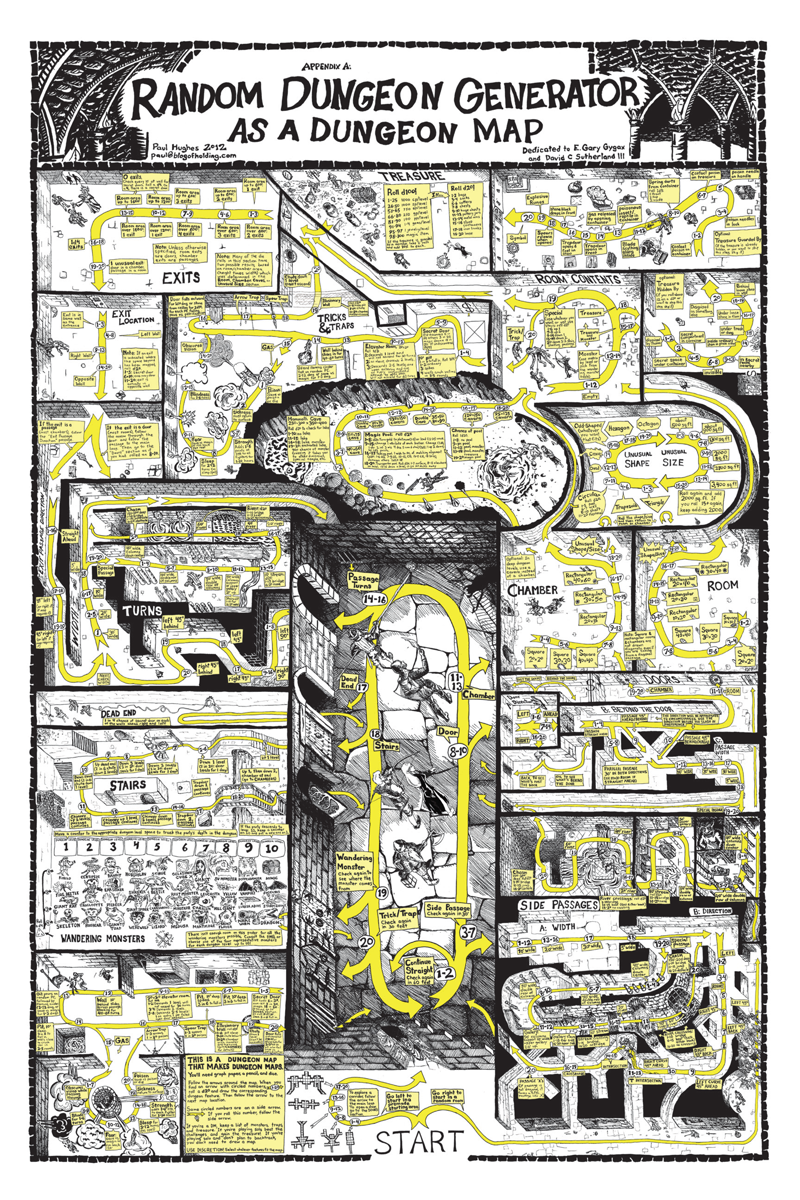
All the backers will eventually get a big PDF of this, and most of you will get one, two, or more paper copies as well. The printer schedule is later than I’d like: I’m still hoping for late April delivery. We’ll see. I’d planned for the poster to be available for WOTC’s reprintings of the First Edition books. It looks like WOTC has pushed the reprints to June, so even if I’m late, I’ll still beat them.
I’m working hard on all the other backer rewards too! I’ve got a lot of draft versions of things: I’ll show you some samples of what’s coming.
Dungeon Robber: I spent all this weekend playtesting Dungeon Robber, the solo board game played on the poster. (As a reminder, everyone who donated $5+ will get a PDF of Dungeon Robber.) Here’s a sample table from the Treasure section:
USELESS ITEMS TABLE (roll 1d6)
1: Bad Art. Heavy. You are convinced it is worth 500 GP and will carry it in preference to any Heavy treasure of lesser value. You will only drop it if you are fleeing from a monster; while carrying it, you will not flee if you are at full health. If you get it out of the dungeon, you’ll be unable to sell it. Still, you’re convinced it’s a masterpiece. You’ll keep it in your house, and no one will ever appreciate it like you do. High Wisdom: You recognize this item as worthless and leave it where it is.
2: Moldy clothes. They’re worth 1gp, but when you pick them up, you must save or take 1d4 damage.
3: Flawed weapon. It does 1d6 damage, and breaks the first time you hit with it. Worth 1gp.
4: Spoiled food. You can only throw away spoiled food if you’re being pursued by a nonintelligent monster, and you’ll throw away good food first. If you leave the dungeon with it, you get sick for 1d6 days, during which time you will not heal hit point damage. Worth 0gp. High wisdom: You recognize this food as spoiled and leave it where it is.
5: 1d20 cp.
6: 1d20 sp.
And here are 9 ways I died while playtesting:
Conclusion: The most dangerous place in the dungeon is level 1 when you’re returning with treasure!
Interactive version of the poster: Haven’t started on this yet. Eventually, $5+ backers will get it.
All-Star Dungeon Master book: $17+ backers will get this PDF containing adventures and rules from heavyweight DMs Mike Shea, Mike Mornard, Tracy Hurley, Tavis Allison, Jared von Hindman and James Maliszewski. James Mal has shared with me a rough draft of level 1 of Dwimmermount: as a preview, I’ll send that separately to you $17+ backers. Players from my campaign, DON’T LOOK! Actually, go ahead: it will do you little good, now that we’re on LEVEL TWO of Dwimmermount!
D&D Stickers! $22+ backers are all getting a sheet of 20 stickers by various awesome artists. The guy at Stickeryou.com was so excited about how the stickers looked that he sent me a blurry photo from his cameraphone of them on the assembly line. It doesn’t do them justice, so I’ll wait to show you a scan of the actual stickers. But, on a related note…
Virtual Table tokens! If you’re getting stickers, you can also get WOTC Virtual Table versions of all the stickers as hero and monster icons. Most of the icons are cropped portraits of the original stickers. Here are a few!
 |
 |
 |
 |
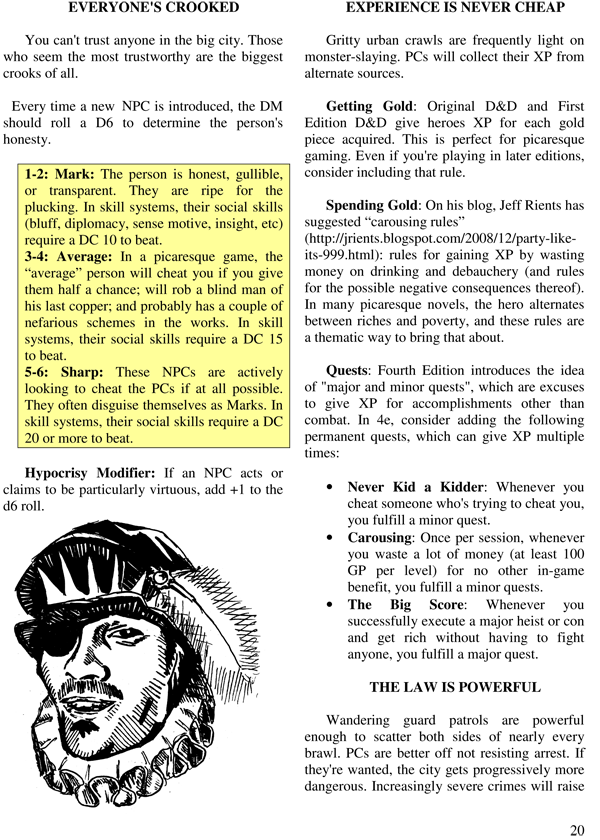
Paul’s DM Notebook: This is an ever-growing reward for $22+ backers: I keep on thinking of things to add. Here are two pages from my current draft (click for PDFs):

That’s where I am right now. I’m going to keep working on every reward until it’s time to put posters in tubes!


 Today is the last day of the Random Dungeon kickstarter! We hit our second Burlew Point. I can’t talk about this reward quite yet, but it is more a “make the world a better place” than a “more swag” reward, it’s something that Rich Burlew and I believe in, and it does involve giant statues and pandas. More details soon!