flying carpet, leveled

July 18th, 2012

Intelligent flying carpet: PCs who solve a runic puzzle woven into their carpet might discover that it can not only obey voice commands, it can be trusted on independent missions. While it can’t communicate with the user (beyond “fly up for yes, fly down for no,”) it will happily follow orders to rendezvous at certain places at certain times. Furthermore, when its owner whistles, the carpet will speed to his or her side.

My old houserules for leveling magic items mean that every piece of magical treasure has the potential to gain power in ways that the players can’t predict. Furthermore, WOTC recently invented the concept of the “rare magic item,” but we don’t yet have lots of examples.

While some items may get mechanically better (for instance, a +1 sword becomes a +2 sword), it’s more challenging to improve items that don’t have numeric bonuses. I thought I’d go through the Wondrous Items in the 4e Player’s Handbook and give examples of how each could gain powers that reflect their history.

Roll 1d6 for personality quirk:

1: The carpet hates one person in the party. It will tip upside down if that person ever boards the carpet first.
2: It has knowledge of some ancient secret, knowledge which it can’t communicate verbally. It will occasionally disoebey orders and take the PCs to the site of important clues.
3: It’s feisty and protective of one of the PCs. It will butt attackers in the knees. It has a small chance of tripping opponents.
4: It has a bad sense of direction. Every time it travels independently, it has a 20% chance of getting lost.
5: It was once a war carpet. It quivers with excitement when it scents battle. It can charge, in which case you do an extra die of damage with lance and spear hits.
6: It is old and threadbare. It wants nothing more than to lie on a floor in a nice study. It rises from the ground grudgingly, often pretending not to hear its command word the first time.

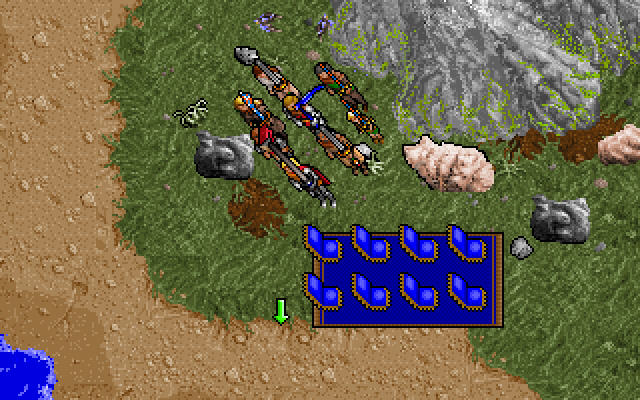
Caravan carpet: The problem with most flying carpets is that they’re not practical transportation for a family. They can only hold 1 person, or at most 1 person and a princess plus monkey.

This carpet can be modified to hold up to 8 people in comfort on overstuffed chairs.

Sports carpet: If properly tuned by an expert weaver, this stylish red carpet’s speed permanently increases from 6′ to 12’+1d4. Every time the carpet is tuned up, reroll the 1d4. When the carpet travels at a speed over 6′, the swooshing note of its passage is audible within 100 feet.

against the patriarchs

July 16th, 2012

How about this as a pitch for a Dragon article:

“AGAINST THE PATRIARCHS

Born into an existence little better than slavery, most female humans in history are seen by the dominant males as mere resources to be used and discarded. This article details four character themes, each a path by which a female human might seek to establish herself in a world that is hostile to her very existence.”

How about this pitch instead?

Matriarchs really get the shaft. Can’t they even have Menzoberranzan? 40 years of Dragon magazine, and there is not even a single character theme designed to undermine the patriarchy!

paladins with expense accounts

July 13th, 2012

“So should we go to Morne, to arrange for approval?” Mostin asked brightly. “Oh, no need for that, Mostin,” Eadric replied. “As an inquisitor, I am more than qualified to release the money to you. I’ll just write you a check to draw against the temple funds.” The Alienist’s mouth dropped open in an expression of disbelief. Here was such an enormous potential for financial abuse that his mind boggled. Then again, thought Mostin, that’s probably why he’s the paladin and I’m not.

Sepulchrave’s Lady Despina’s Virtue is the story of a real D&D campaign, but it’s also one of the most enjoyable fantasy stories I’ve read. It’s got a lot of stuff you can pull out and use in your own campaign. Here’s one thing you can use:

If you want to give a real moral temptation to a paladin, don’t have leering demons offer hellish pacts. Just have the paladin’s superiors give him an expense account.

PCs usually have stuff they want to buy. A lot of it can be used to fight evil, so there will be some legitimate expenses. There will also be a temptation to borrow against the expense account for less-clear-cut expenses, and pay it back out of future loot. See if you can get your paladin to start embezzling.

That’s when you bring in the inquisitors. Revel as the paladin is forced to compromise his ideals to avoid discovery. Laugh as he loses his paladinhood. Celebrate your dark victory as he returns as an anti-paladin!

Or not. But a paladin needs to face some real temptations, or he’s just a fighter with good PR.

Dungeon Robber rules ready to download

July 11th, 2012

Here are the beta rules for Dungeon Robber, the solo board game played on the Random Dungeon Generator poster. (If you don’t have a poster, buy one now!)

I’d describe Dungeon Robber as the next evolution of D&D. It’s important because it has an open playtest, and tons of optional “modules” for changing the game experience. Wow! Download it now!

DOWNLOAD DUNGEON ROBBER

Play it! Test it! Send feedback to me, paul, at blog of holding!

Play Yourself

One of my favorite of the optional Dungeon Robber rules is “Play Yourself” mode, where you stat yourself up by answering a series of highly scientific questions (do you have all your wisdom teeth? Then you have high Wisdom!) and, unprepared as you are, enter the dungeon. I like it because it speaks to one of the central D&D fantasies.

What would you do if you – you yourself – found yourself at the dark entrance of a D&D dungeon?

Smart money’s on turning around and going home. But if I were feeling bold, I might take a sword from the skeletal hand of a dead guardian (not that I know how to use a sword), light a torch, and creep into the quiet labyrinth. I wouldn’t be looking to explore the whole thing. I’d just be looking to see if I could find a souvenir: a nice statue, or a few gold coins. Guys, gold is selling at $1600 per ounce now. That means a single gold piece is worth about $600 (or $3000 if it’s one of those big 1e ten-to-a-pound coins). Even the faded tapestries that D&D parties routinely ignore are probably worth something, or at least would look nice in my Brooklyn apartment.

With every room I entered, I’d be pressing my luck, because I, Paul, am no match for even a level 1 monster. The first time I saw a kobold’s whisker, I’d flee – and hope I remembered the way out.

Of course, this isn’t how D&D does dungeoncrawls. D&D takes all of the scary trappings of a haunted house – monsters, vampires, traps – and lets you and your well-armed friends punch them in the face. It’s like you’re a squad from a World War II movie that wandered into a horror film.

Dungeon Robber is a fear-drenched, cowardly, haunted house, press-your-luck dungeoncrawl. It uses lightly-abstracted D&D rules, with more emphasis on the OD&D fleeing rules than on combat. In an RPG, the level of rule detail lets you know what you should be doing. In OD&D, there’s a lot of rules about fleeing: your chances for losing pursuit by turning corners, passing through doors, and dropping food are specified. In Dungeon Robber, I tried to preserve those rules.

Dungeon Robber is a board game, so you can win or lose. You win if you retire alive and rich. If you retire richer than someone else, you’re more of a winner than they are. But really, if you survive your plunge into the dungeon, however brief, you’ve won.

Let me know about your experiences playing Dungeon Robber! Did you emerge with a handful of silver pieces? Were you killed by a rat? Did you retire with enough money to buy a kingdom?

DOWNLOAD DUNGEON ROBBER

D&D is old-school, Chainmail is new-school

July 9th, 2012

OD&D? Pah! The REAL Fantasy game is Chainmail. And it is way ahead of its time. Here’s why.

As a new-school D&D player, there’s a lot of D&D history I’ve missed. Editing Cheers Gary, gaming with Mike Mornard, and illustrating the AD&D Dungeon Generator have helped, but there’s a lot in D&D that I still don’t understand. I’m going back to the OD&D texts to see whether they can help my new-school game. Right now, I’m reading Chainmail.

Chainmail has Dice Pools. When you attack some Light Foot with your Medium Horse, you roll 2d6 per horseman, and you get a success (kill) on a 5 or a 6. The dice pool mechanic wouldn’t be seen again until Shadowrun in ’89.

Chainmail has ascending Armor Class. Sort of. Chainmail man-to-man combat is run by crossindexing things on matrixes. On the melee table, there are headings for the different types of armor (No Armor through Plate Mail and Shield). On the Missile Fire table, the armor types are replaced with ascending numbers: 1 for No Armor, 2 for Leather, up to 8 for Plate Armor and Shield.

Chainmail has at-will spells. There are no spellpoints or rules for Vancian casting in Chainmail. A wizard can throw a fireball once a turn, if he likes.

Chainmail has rules for counterspells – and they’re simple: when an enemy wizard casts a spell, roll a target number on 2d6 to counter it. D&D 3e had counterspell rules that no one ever used because they involved readying an action. I don’t think any other edition has counterspells as part of the core rules.

Chainmail has rules for spell failure. A weak wizard (a seer) can try to cast a difficult spell – they just have a chance of failure. This was taken out of D&D, and generations of fans have tried to houserule it back in.

treasure from Venus

July 6th, 2012

“Ruins. Cyclopean, strange, and alien in contour, half-destroyed shapes of stone were blurred against a dim background.” What’s waiting for us on Venus, according to Henry Kuttner’s science fiction story “Beauty and the Beast”, is a D&D dungeon crawl setting.

No dungeon crawl is complete without treasure. In “Beauty and the Beast”, astronauts find a jewel: “Oval, large as an egg, the gem flamed gloriously in the light of the electric torch. It had no color, and yet seemed to partake of all the hues of the spectrum.” Even more valuable, though, are the flowers that surround the ruins. “The new flowers had proved tremendously popular, and florists demanded them avidly. Lovelier than orchids they were, and they did not fade for a long time after being cut.”

If PCs travel to Venus and find beautiful flowers surrounding empty ruins, they probably won’t think to sell them to florists. If they do, they might get rich. They might also (spoilers ahead) plant the seeds of the destruction of civilization.

The egg-sized jewel turns out to be an egg (a classic D&D treasure trick). It hatches a Venusian, who, too late, tries to warn humanity about the beautiful flowers: “And now, the flowers grow on Earth. In a month, the petals will fall, and from the blossoms the virus will develop. And then, all life on Earth will be destroyed, as it was on Venus, and nothing will exist on all the planet but bright flowers and the ruins of cities. I must warn them to destroy the blossoms now, before they pollinate…”

drow are from the 18th century

July 4th, 2012

July 4th is a time for Americans to celebrate the Founding Fathers, and what better way than with a discussion of the DROW?

Visually, what’s the most interesting thing about drow? Is it the ebony skin, which lures cosplayers into racially complicated situations? No! It is the WHITE HAIR.

Costume-wise, perfectly white hair usually implies powdered wigs, which imply, in turn, the 18th century: the founding fathers, Mozart, Marie Antoinette. What if we used the 18th century aesthetic to inform our concept of the drow?

While the United States’ national story has the Founding Fathers as unequivocal heroes, most everyone else in a powdered wig is creepy in some way: bad old King George! Debauched Mozart! Sinister Salieri! that creepy guy from Dangerous Liaisons!

Drow actually make a fine addition to this creepy collection. Therefore, drow should probably wear silk jackets and high heeled boots. They should carry sword sticks (that crumble if exposed to sunlight). Their beauties – men and women both – have white beauty marks. The drow attend masques and balls in which they exchange innuendo and assassinate their rivals. (Drow dances, like those of Melnibone, are to the well-tempered screams of tortured slaves.) Drow attitude to non-drow is a heightened parody of the pitiless indifference of French nobility for the lower orders.

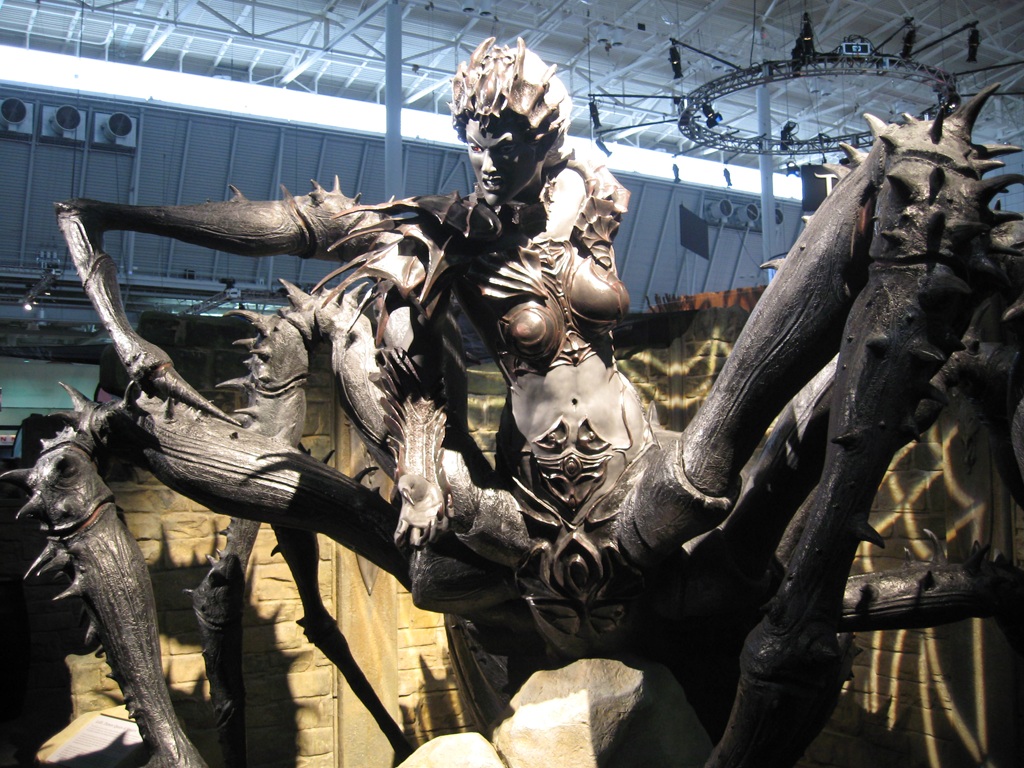
Furthermore, drow worship Lolth, the Queen of the Demonweb Pits. Here’s a statue of her from Pax East 2012.

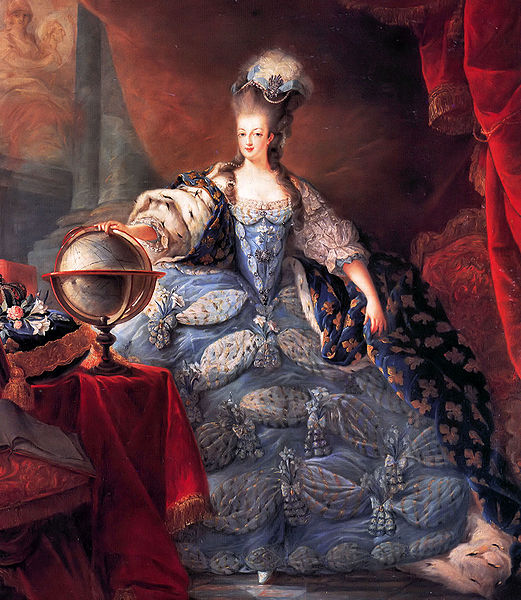
Throw a dress on her, and her silhouette reminds me of another queen, also famous for her indifference to the lower orders:

How to use drow in your campaign:

Make them charming. Witty, even. Have them take snuff. Play harpsichord music as background music when they’re around. They can be just as diabolical, unfeeling, and sinister as ever – more so, even.

stories from Mike Mornard’s game table

July 2nd, 2012

In my OD&D campaign DMed by Mike Mornard, I’m sort of the Chief Inquisitor – the guy who’s most likely to bog down the game with questions about Gary Gygax’s and Dave Arneson’s games.

Usually I try to organize such reminiscences into coherent articles, like “this is the one about player skill” or “this is the one about henchmen”. Sometimes pieces don’t fit into a narrative. So: this is the one with a list of random stories.

Monster PCs: Could you play monsters in OD&D? Sure! Mike played an 8th level balrog at one point. Mike related a story of a roleplaying session in which the party had to distract a wizard. Mike’s balrog came to the door wearing an asbestos press hat, claiming to be from the Balrog Times. He made fire flash from his thumb to simulate camera flashes. He not only distracted the fame-hungry wizard but got a guided tour of his mansion. Mike finished the story with the a refrain common to participants in an immersive role-playing session: “and we didn’t roll dice once.”

Setting your Friends on Fire: Our (well, mostly Tavis’s) frequent misadventures with flaming oil prompted this story: Once in Greyhawk, Mike and the gang were fighting mummies. Mike and another player planned to coordinate their actions: one would throw oil on the mummy, and the other would torch him. Before their turns came up, Mike was jostled. A bad die roll later, and Mike spilled his oil on Ernie. A moment later, the other player was jostled, and he accidentally hit an oil-soaked Ernie with his torch. (I’d like to know: what were the mechanics behind this? Natural 1s?)

Undead level drain: A lot of people hate the fact that undead permanently drain levels: in fact, that’s been removed from D&D’s recent editions. Mike told us that, at first, undead level drain was impermanent. Unless you died of level drain, you’d regain your levels through healing. During playtesting, Gary decided that undead were insufficiently frightening, and made the level drain permanent.

In fact, Gary and the others were surprised when so many people hated the undead level drain. People didn’t like that it made you a level behind the rest of your party. In Gary’s game, because of the Greyhawk campaign’s intense schedule and huge player base, that was not as big a deal as it was for most gaming groups. In Greyhawk, players and characters were always leaving and joining the party, a different mix in every session, and they’d typically be anywhere from 3 to 5 levels apart.

If a 5th level party had some level 1 characters in it, they’d stop on level 1, find some goblins, and let the level 1 characters fight them. Once they’d faced some danger – earning their XP – the group would go down to level 3, and the level 1 characters would stand on the inside of the party holding torches. They’d get to share the XP from the mission because they’d faced some combat earlier. Mike doesn’t know how this practice evolved: it was already in place when he joined the game.

Fast-leveling PCS: Since you got XP from money, the Greyhawk players would fast-level characters by giving them all the loot from the adventure. When Mike suggested we give all the loot to the first-level cleric to level him to 2, it blew my mind.

Although this is possible under the XP rules, I’ve never seen this practiced, or suggested, in 1e games. In Greyhawk, they did this all the time.

Subsystems: When D&D was being invented, people didn’t mind the fact that every piece of the game had its own subsystem. As Mike says, “We liked rolling dice.” They also didn’t mind consulting charts. Charts and unique subsystems were respected pieces of wargaming tradition. Some of the D&D mechanics, in fact, are direct evolutions from war games.

The use of 1d6 for a morale roll was used in some 60s war games. The problem was that such a roll was very granular, and made for a steep curve. Gary switched to 2d6 to allow for finer gradations.

Gary’s experimentations with multiple dice to produce bell curves are, in many ways, central to D&D. He must have been extra frustrated one day when he saw that Mornard and someone else were playing a game where one was using 2d6 and one was using 1d12 for morale. Gary just shook his head (and presumably gave a lecture on probability).

Character death: As a new-school player, one of the speed bumps I hit when trying to understand OD&D was the attitude towards character death. Perhaps because the Greyhawk players were coming from war games, they didn’t mind the occasional arbitrary death, even if it was inflicted by another player.

Mike told a story of a wizard played by Ernie Gygax. Mike doesn’t know the character’s name because people usually called the character “Ernie’s Wizard”. He found a powerful magic item, possibly called “the Orb of Cleric” (not an item I’ve heard of, but maybe Mike can clarify). Tom Champeny’s character was a cleric and wanted it. He offered to buy it, gave Ernie presents, etc. Finally, out in the wilderness one day, he cast Finger of Death on Ernie and took it. No one got upset: 13-year-old Ernie was like, “oh well, guess i should have given it to you.” (Ernie’s Wizard’s henchmen got him resurrected.)

Nevertheless, screwing each other over was only a sometimes activity. In Greyhawk, players tended towards neutrality. If your high-level character died, they’d usually get you resurrected. In Blackmoor, on the other hand, your body would be looted before it hit the ground.

What do hit points represent? Over the years, there have been a lot of ex post facto justifications for hit points, some by Gygax himself. In the end, as Mike says, “hit points are something to make combat go the way Gary wanted.” That’s a good thing to remember next time you find yourself tempted to jump in an internet argument about the subject.

biker gangs in the dungeon

June 29th, 2012

Peter S. Beagle’s Folk of the Air, about a Society for Creative Anachronism chapter where MAGIC IS REAL, is much less well-known than The Last Unicorn. Although it takes place in California, it still has a few details for your dungeon.

…along corridors they could not see, around certain doubtful corners that had to be caught up with before they could be turned, and through high, transparent outlines, the color of abandoned spiderwebs, cold to make the blood ache.

Of all these dungeon details, my favorite is the corner that you have to catch. I assume that it moves ahead down a seemingly-endless corridor, at your speed or at the speed of a jogging human, whichever is slower.

It might be cool to have a couple of these moving turns, set to different speeds. One is uncatchable by even the fastest runner. But in another part of the dungeon is a MOTORCYCLE.

I once played in a game which featured motorcycles in a dungeon. It’s great because they’re so fast and aggressive, but their speed is so badly suited for winding corridors. Most of a biker gang will be wiped out by dungeon walls. D&D motorcycles should obviously be ridden by skeletons.

download the original random dungeon generator

June 28th, 2012

Today, Wizards offers a PDF of the Random Dungeon Generation section of the first edition DMG. Download the PDF! And then celebrate by buying my poster!

Kickstarter stretch goal news: I’ve got the board game rules for Dungeon Robber in pretty good shape, and will probably release a beta version next week.